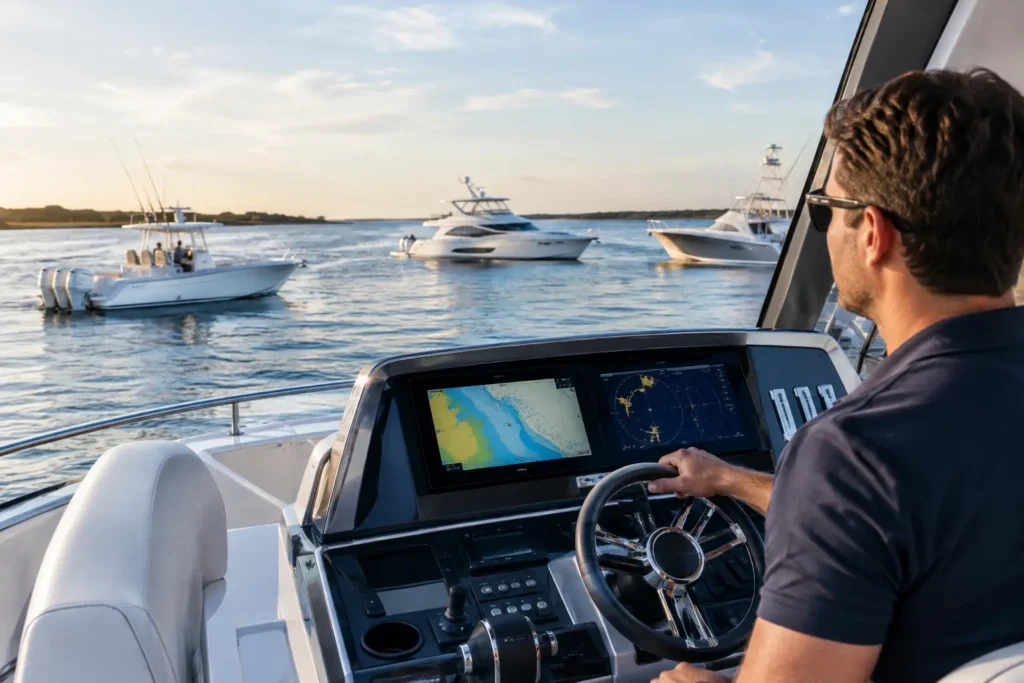
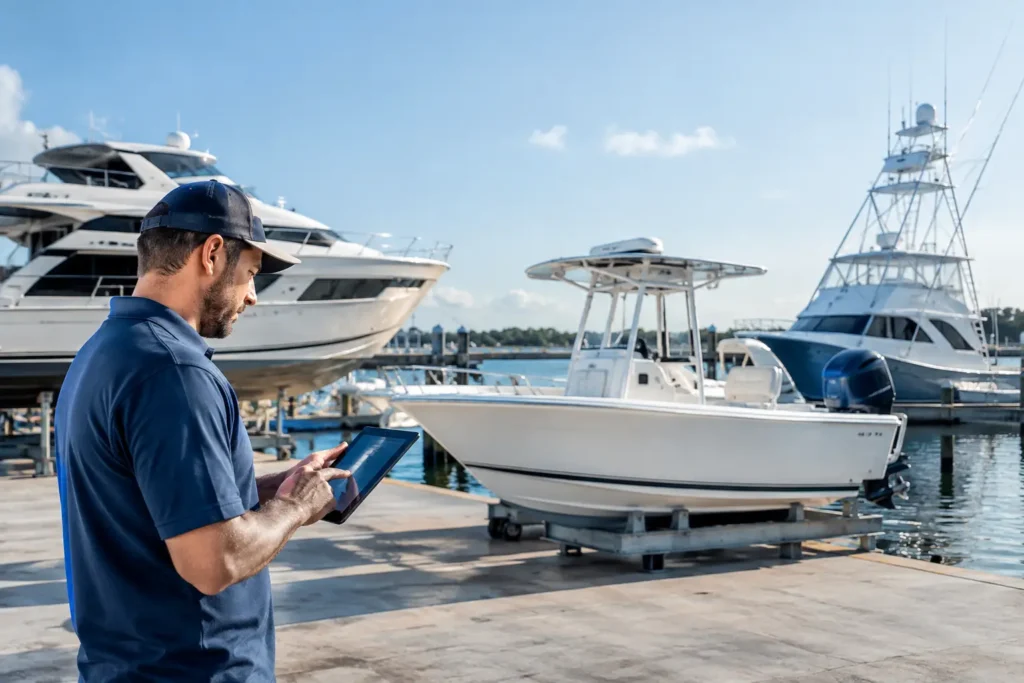
A warning light appears halfway through a run. The engine is running rough at idle. A bilge pump cycles more often than it should. For most boat owners and technicians, the hard part is not knowing that something is wrong. It is turning a symptom, a photo, a sound, or a half-complete service record into a useful next step. AI marine diagnostic software is built to shorten that gap without pretending that a phone can replace a qualified mechanic.
Built from the water up, the right diagnostic system helps people capture what is happening on the vessel, organize the relevant details, and move the job forward while they are still standing at the dock. That means less time hunting through old invoices, text threads, manuals, and handwritten notes – and more time making a clear decision.
What AI marine diagnostic software should actually do
Marine diagnostics have always depended on context. A fault code alone rarely tells the full story. The engine model, hours, recent work, operating conditions, battery voltage, fuel quality, and even the way an owner describes the problem can change the likely cause.
Good AI marine diagnostic software brings those pieces together. It can turn a spoken description such as, “The port engine loses RPM after twenty minutes,” into structured job information. It can read an engine plate or a photo of a serial number, pull useful details from uploaded documents, and point a technician toward the checks that make sense before parts are ordered.
That is a meaningful difference from a generic chatbot. Generic tools may produce a convincing answer, but they do not know the vessel’s maintenance history, installed equipment, open work orders, or the parts already on hand. A marine-focused system should work from actual boat records and operational data, not guesses dressed up as certainty.
For a boat owner, the result may be a better service request with photos, symptoms, and equipment details attached. For a technician, it may be a clearer diagnostic starting point and a traceable record of what was inspected. For a captain or crew member, it may mean documenting a concern during watchkeeping before it becomes a guest-day interruption.
The real value is faster, better information
The best diagnostic process starts before a technician touches a tool. When the first report is vague, the entire job slows down. “Engine issue” tells a service manager almost nothing. “Starboard generator cranks slowly after sitting overnight, batteries tested at 12.1 volts, no visible corrosion, photo attached” is a useful starting point.
AI can help standardize that intake without forcing boaters or crew through a long form. A user can speak naturally, upload a photo, or paste in a note. The software can organize the information into a job description, identify missing details, and preserve the original report for reference.
That matters because marine work is rarely done from a desk. A tech may be balancing on a swim platform, working in a hot engine room, or checking a fault while the boat is scheduled to leave in two hours. The software needs to be mobile-first, quick to use, and practical around grease, glare, weak signal, and limited time.
AI also helps surface the records that give a symptom meaning. If a seawater pump was replaced last month, a new overheating complaint deserves a different first look than one on a boat with no recent cooling-system work. If the same alarm has appeared three times in a season, the team should see the pattern instead of treating every call as a fresh mystery.
Where diagnostics fit in a working marine operation
Diagnostics are not a separate task. They connect to the service workflow before and after the repair. That is where many marine businesses lose time.
A useful system can begin with the customer request, build a job, assign the technician, capture time, record findings, and attach parts used. If an item is pulled from inventory, the count should update. If the job is billed, the financial record should not require a second round of manual entry. When the work is complete, the owner should have a clean service history rather than an invoice that says only “repair as needed.”
For service companies and boatyards, this creates operational control. Managers can see whether a job is waiting on customer approval, a distributor order, access to the vessel, or additional diagnosis. Technicians spend less time deciphering notes and more time doing billable work. Owners get better documentation for resale, warranty conversations, and future maintenance decisions.
For larger yachts, the same principle applies at a different scale. Crew may use diagnostic guidance alongside planned maintenance, fuel logs, machinery records, checklists, and watchkeeping notes. The goal is not to bury crew in another system. It is to make the vessel’s operational memory available when it is needed.
AI is useful, but it has limits
No serious marine operation should treat AI output as a final diagnosis. A software recommendation is a starting point, not a substitute for testing, manufacturer procedures, safety practices, or professional judgment.
This is especially true with engines, high-voltage systems, fuel systems, fire suppression equipment, and anything affecting seaworthiness. A loose connection, a sensor failure, a contaminated fuel supply, and a mechanical fault can create similar symptoms. The answer still comes from inspection, measurements, and experience.
The quality of the result also depends on the quality of the vessel data. If the engine make and model are wrong, maintenance records are missing, or a photo is unreadable, the software should say so. It is better to ask for the right information than to produce an overconfident answer.
There is also a practical trade-off between speed and documentation. Capturing every detail can slow a technician down, while capturing too little creates return visits and billing disputes. The right setup makes essential information easy to record in the moment, then gives the office enough structure to close the loop later.
What to look for before choosing a platform
Not every AI tool belongs in a marine workflow. Before adopting AI marine diagnostic software, ask whether it understands the equipment and the people using it.
First, it should accept real-world inputs. Voice notes, photos of engine plates, fault descriptions, scanned invoices, and equipment documents are often more valuable than a rigid form. Second, it should connect diagnosis to action: create a job, assign work, record labor, check inventory, and maintain a vessel-specific history.
Third, it needs accountability. A technician should be able to see what information led to a recommendation, add inspection notes, and document the final finding. That traceability protects the service business and gives boat owners confidence that the work was not based on a black-box response.
Finally, consider adoption. If the system takes five minutes to open, requires duplicate entry, or only works well in an office, it will not survive a busy season. The people doing the work need a clear reason to use it every day.
Yacht Logic approaches this problem as part of a connected operating system, not as a novelty feature. The same vessel details that support a service request can support maintenance records, technician workflows, barcode-based inventory, and two-way QuickBooks sync. The practical benefit is continuity: less rekeying, fewer lost details, and a better record after the boat leaves the dock.
A better first response to a vessel problem
When a boat develops a problem, owners do not need a stack of disconnected apps or a vague promise that AI will solve everything. They need a better first response: capture the issue clearly, connect it to the right vessel information, and give the right person enough context to act.
That is where practical marine AI earns its place. It reduces the paperwork around diagnosis, preserves the details that usually get lost, and helps the people responsible for the boat stay one step ahead of the next service call.