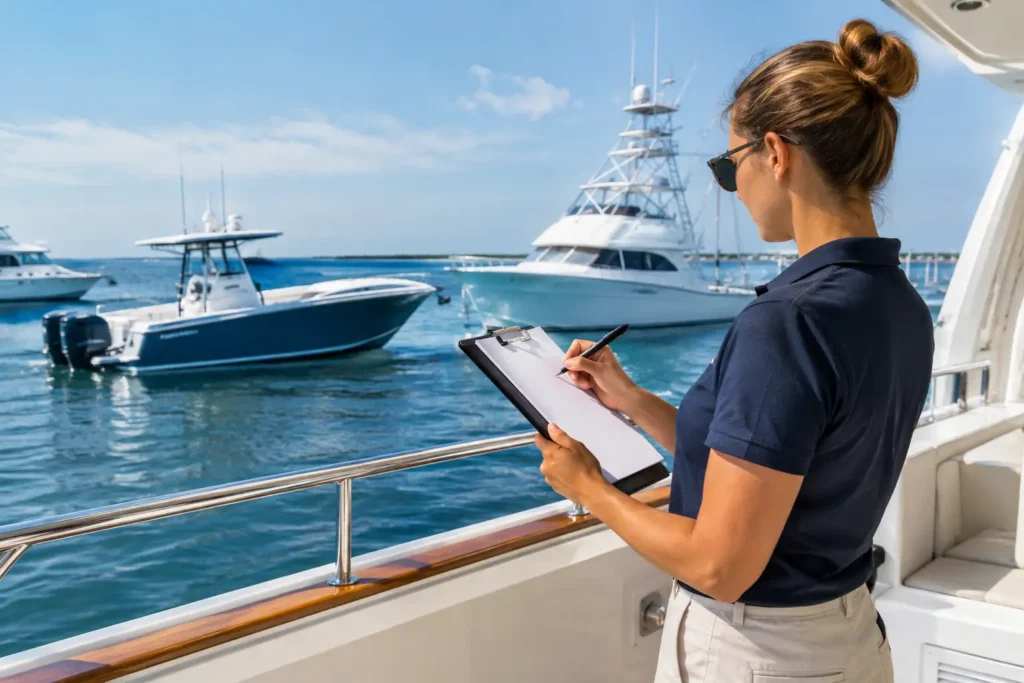
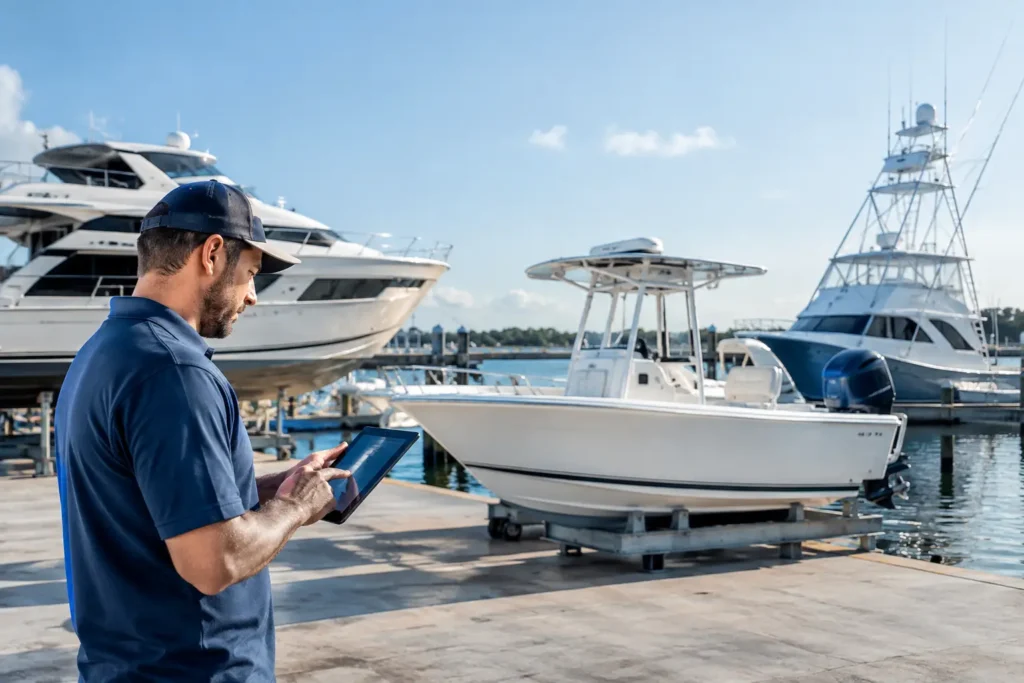
A captain standing in an engine room does not need another dashboard full of charts. A boat owner calling for service does not need to hunt through old emails for an engine serial number. And a technician at the dock cannot afford to finish a job, drive back to the office, then spend an hour rebuilding notes from memory. Yacht technology earns its place when it turns those real-world moments into faster, traceable work.
The marine industry has never lacked equipment. It has lacked connected information. Records are often split among paper binders, text messages, invoices, spreadsheets, photo libraries, and the memory of the one person who knows where everything is. That works until a survey, warranty issue, breakdown, crew change, or busy service season exposes the gap.
The right technology does not replace sound seamanship, experienced technicians, or a captain’s judgment. It gives them a cleaner record of what happened, what is due next, and what needs attention before a small problem becomes a costly one.
Yacht Technology Is an Operations Decision
The best marine software starts with the job, not the feature list. A useful system should fit the way people actually work: on a phone at the dock, in a hot machinery space, between guest requests, or while moving from one yard task to the next.
That matters because vessel operations are rarely linear. A service call may start with a spoken complaint from an owner, turn into a photo of a leaking fitting, require a parts lookup, and end with labor, materials, and recommendations that need to be billed. If each step lives in a different system, the office is left chasing details after the boat has left the dock.
For recreational owners, the same issue shows up differently. Maintenance history gets lost when a boat changes hands. Costs become difficult to track. Important documents are buried in email attachments. The owner knows something was done last spring but cannot quickly confirm the date, vendor, part number, or total spend.
Good yacht technology creates continuity. It ties a vessel’s identity, records, maintenance, service activity, and operating data together so the next decision is based on facts rather than a scavenger hunt.
Where Better Systems Save Real Time
Vessel records that stay with the boat
A Hull ID, engine plate, generator model, manuals, warranties, survey reports, and invoices should not be scattered across personal phones and filing cabinets. Centralized records make ownership easier and give service teams a better starting point before they arrive.
The trade-off is simple: records are only valuable if someone can add and retrieve them without friction. Systems that demand perfect data entry tend to be abandoned. A practical approach accepts how marine work happens. A photo, scanned document, or short note can be the first step. AI can then help extract useful details, organize documents, and make them searchable later.
For owners, that means less uncertainty. For a captain or manager, it means fewer calls asking where a manual, past invoice, or serial number can be found.
Maintenance built around actual vessel use
Calendar reminders are helpful, but boats do not operate only by the calendar. Engine hours, generator hours, seasonal layup, warranty schedules, and equipment-specific intervals all matter. A tender that runs constantly during a busy charter period has different needs than one used twice a month.
The goal is not to flood people with alerts. It is to make upcoming work visible early enough to plan it. That may mean ordering a service kit before a trip, grouping related yard work, or scheduling a technician before a minor issue interrupts a weekend on the water.
Owners also need maintenance costs in context. Knowing that a service invoice was $2,400 is less useful than knowing what it covered, which asset it applied to, and whether that expense is recurring. Over time, clean records help identify patterns in operating costs and equipment reliability.
Dockside service that reaches the office cleanly
For marine service businesses, time is lost in the handoff between the technician and the office. Handwritten work orders are hard to read. Parts used in the field do not always reach inventory. Hours are reconstructed days later. Invoices wait because the job details are incomplete.
Mobile-first workflows close that gap. A technician should be able to create or update a job, track time, attach photos, record parts, collect signatures, and document recommendations while standing beside the vessel. The office should receive usable information without rekeying it.
That does not mean every business needs the same setup. A two-person mobile mechanic operation has different needs than a multi-location yard with stocked trucks, subcontractors, and accounting staff. But both benefit from one source of truth for jobs, labor, parts, and customer history.
Two-way QuickBooks synchronization can also remove a common point of failure, provided the chart of accounts, customer records, and item structure are set up carefully. Automation cannot repair disorganized accounting on its own. It can, however, stop staff from entering the same information twice.
Inventory that reflects what is on the shelf
A missing $12 impeller can delay a job worth thousands. In marine service, inventory accuracy is not a back-office detail. It affects scheduling, margins, customer trust, and how many unnecessary trips a technician makes.
Barcode-based inventory tools are useful when they are fast enough to use at the point of work. Scan a part as it is pulled, assign it to the job, and the system can update inventory and billing records at the same time. The process sounds basic because it is. That is the point. Technology should remove repeat work, not create a new administrative chore.
Catalog data and supplier information can improve parts lookup, but human verification still matters. Marine equipment is full of model variations, retrofit components, and vessel-specific modifications. The system can narrow the search. An experienced technician confirms the fit.
AI Has a Job to Do, Not a Story to Tell
AI is useful in yacht operations when it turns unstructured information into action. A captain can describe an issue in plain language. A technician can upload a photo of an engine plate. An owner can forward a service document. The technology can help create a record, identify likely equipment details, draft a checklist, or surface related maintenance history.
That is more valuable than generic chat features because it respects the source material of marine work: spoken observations, photos, paper documents, part numbers, and operating notes.
There are limits. AI should not make final diagnostic calls without qualified review, especially where safety, propulsion, electrical systems, or compliance are involved. It can assist with troubleshooting paths and documentation, but it does not replace ABYC standards, manufacturer guidance, or professional judgment. A useful system makes that boundary clear.
For large-yacht crews, the value expands into daily coordination. Watchkeeping notes, fuel logs, checklists, guest preferences, and maintenance observations should carry forward from one shift to the next. The crew needs enough structure to stay accountable, without turning every task into a screen exercise.
This is where captain-built software has an advantage. It recognizes that the deck, bridge, engine room, and guest areas all produce different kinds of information. One rigid office workflow will not serve them equally well.
What to Look for Before You Commit
When evaluating yacht technology, start with the work that creates the most friction now. It may be lost maintenance records, slow invoicing, poor inventory visibility, crew handovers, or the inability to see service history before taking a call. Solve that problem first.
Then test the system where it will actually be used. Can a technician complete a job from a phone with wet hands and limited signal? Can a boat owner find last year’s invoice in seconds? Can a captain log a fuel event without creating extra work at the end of a watch? If the answer is no, the software may look good in a demo but fail on the vessel.
Data ownership and portability deserve attention as well. Your vessel records, customer history, and operating documentation are valuable assets. Know how they are stored, who can access them, and what happens if roles change or you move to another provider.
Yacht Logic was built from the water up around this practical standard: turn vessel information into usable operations data where the work happens. Whether the need is a free place to organize a boat’s records or a connected system for a growing service operation, the measure is the same – does it give you more control with less paperwork?
Start with one recurring point of friction this week. Capture the record at the source, make it available to the next person who needs it, and build from there. That is how better vessel operations take hold: one cleaner handoff at a time.