Running a modern marine workshop means managing far more than repairs. Service centers must coordinate technicians, vessel schedules, parts, customer communication, inspections, quotes, billing, and maintenance records—often across multiple locations. When these processes rely on spreadsheets, paperwork, and disconnected systems, small inefficiencies can quickly become lost time and reduced profitability.
Marine workshop software brings these activities together in one centralized platform. Designed specifically for boat repair shops, marinas, maintenance yards, mobile technicians, and yacht service businesses, it helps streamline daily operations while giving managers greater visibility into jobs, inventory, customers, and financial performance.
Why Marine Workshops Are Moving Beyond Manual Processes
Manual administration creates problems that are particularly costly in the marine industry. A repair history may be buried in an old folder, a technician can be double-booked, a critical part may be missing from inventory, or a customer may have to send multiple emails just to find out the status of their vessel.
Scheduling is especially challenging. Marine businesses may need to coordinate technician availability, slip space, haul-outs, dry-dock schedules, parts deliveries, and vessel availability at the same time. Without a centralized system, keeping everything aligned becomes difficult.
Quoting and inventory can create additional headaches. Outdated pricing information or manual data entry can result in inaccurate estimates, while poor inventory visibility can delay repairs when the right part is not available.
Marine workshop software addresses these challenges by connecting the information needed to manage a job from the initial customer inquiry through completion and invoicing.
Key Features of Marine Workshop Software
The most effective marine workshop software combines several core capabilities in a single system.
Job and Technician Management
Digital work orders replace paper-based job tracking with a centralized record of every repair or service task. Managers can assign technicians, monitor progress, track labor time, and manage multiple jobs more efficiently.
Scheduling tools can also help workshops avoid conflicts by providing a clear view of technician availability and upcoming bookings. Time tracking provides accurate information for payroll and billing while giving managers better insight into how long jobs actually take.
Inventory and Parts Management
Marine repair businesses often manage thousands of specialized parts and accessories. Knowing what is available—and where it is located—is essential for keeping jobs moving.
With marine workshop software, teams can monitor inventory in real time, organize parts by supplier or location, receive low-stock alerts, and generate purchase orders when additional inventory is required. Better parts visibility helps reduce delays and prevents technicians from wasting time searching for equipment.
Customer and Vessel Management
A marine business does not simply service a customer—it services a vessel with its own history, equipment, maintenance requirements, and service schedule.
A vessel-focused CRM can maintain customer and boat profiles alongside detailed records of previous work. Technicians and service managers can quickly see what was repaired, when the work was completed, and what was previously recommended.
Automated service reminders can also help bring customers back for seasonal maintenance and routine inspections. Two-way email and SMS communication keeps customers informed about repair progress, approvals, and other important updates.
Digital Inspections Improve Transparency
Inspections are another area where marine workshop software can make a significant difference.
Instead of completing paper inspection sheets, technicians can use mobile devices to record findings, take photos and videos, add notes, and document recommended repairs. Customers can then see exactly what the technician found and provide authorization electronically.
Digital checklists also help technicians follow consistent procedures and reduce the likelihood of missing important inspection or safety steps. Maintenance, warranty claims, modifications, and other service activity can be documented in a centralized record, creating a more complete history for both the workshop and vessel owner.
Work From the Dock With Cloud and Mobile Access
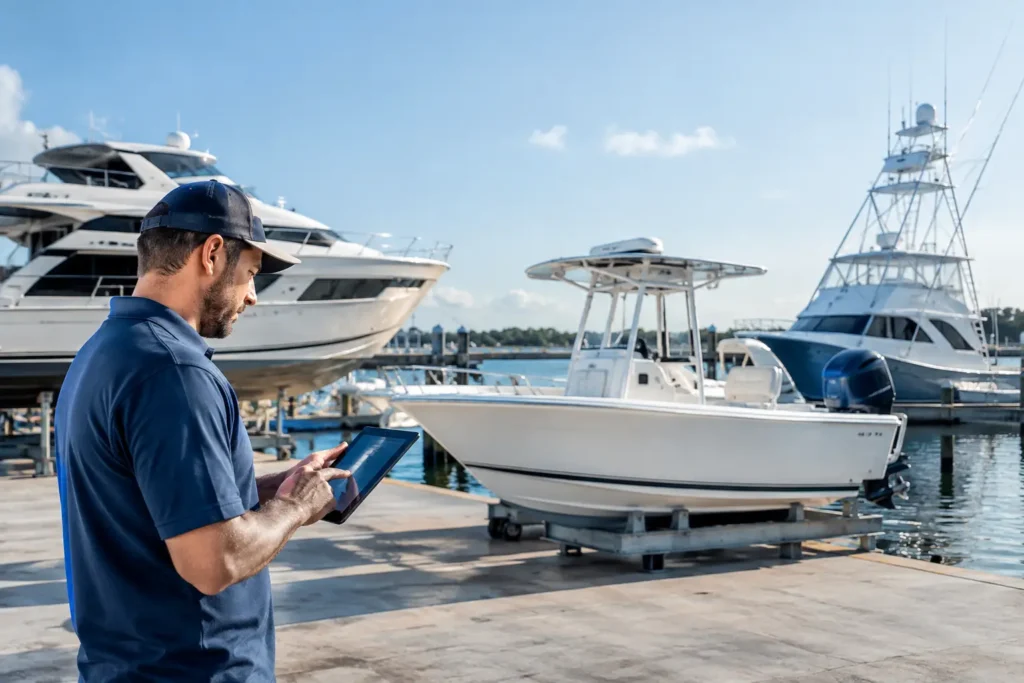
Marine service work does not always happen behind a desk. Technicians may be working on vessels in a marina, at a service yard, or offshore.
Cloud-based marine workshop software gives teams access to current information wherever work is taking place. Technicians can update work orders, capture photos, record labor, and communicate job progress directly from a smartphone or tablet.
Offline functionality is particularly useful in areas with limited connectivity. Technicians can continue working without an internet connection and synchronize information when connectivity is restored. This keeps the workshop and field team working from the same information instead of relying on handwritten notes and delayed updates.
Why Marine-Specific Software Beats Generic Business Tools
Generic accounting, CRM, or project-management platforms may handle individual pieces of a marine operation, but they often lack the industry-specific workflows a workshop needs.
Marine businesses may need vessel-centric records, haul-out scheduling, winterization tracking, component histories, dockside service management, and boat storage capabilities. Specialized marine workshop software such as Yacht Logic Pro is designed around these requirements rather than forcing a workshop to adapt its processes to generic software.
That specialization can make a significant difference when managing complex marine service operations.
Integrations and Implementation
Integration is another important consideration when choosing marine workshop software. Connecting the workshop platform with accounting systems such as QuickBooks, Xero, or MYOB can reduce duplicate data entry and create a smoother connection between service operations and financial management.
Payment processors and parts supplier catalogs can provide additional opportunities to streamline workflows.
A successful implementation should begin by defining clear goals, followed by a trial or demonstration, data migration, staff training, and a phased rollout. Measuring results after implementation helps determine whether the software is delivering the expected improvements.
A Smarter Future for Marine Service Businesses
The right marine workshop software does more than digitize paperwork. It connects jobs, technicians, inventory, customers, vessels, inspections, and billing into a single operational workflow.
For repair shops, marinas, maintenance yards, mobile technicians, yacht management companies, and other marine businesses, that visibility can mean fewer scheduling conflicts, better customer communication, improved parts control, and less administrative work.
The transition from manual processes to a connected digital workshop is ultimately about gaining control. When technicians have the information they need, managers can see what is happening across the business, and customers receive faster and more transparent service, the entire operation becomes easier to manage.
For marine businesses looking to improve efficiency and profitability, marine workshop software provides a practical foundation for building a more organized, connected, and scalable service operation.