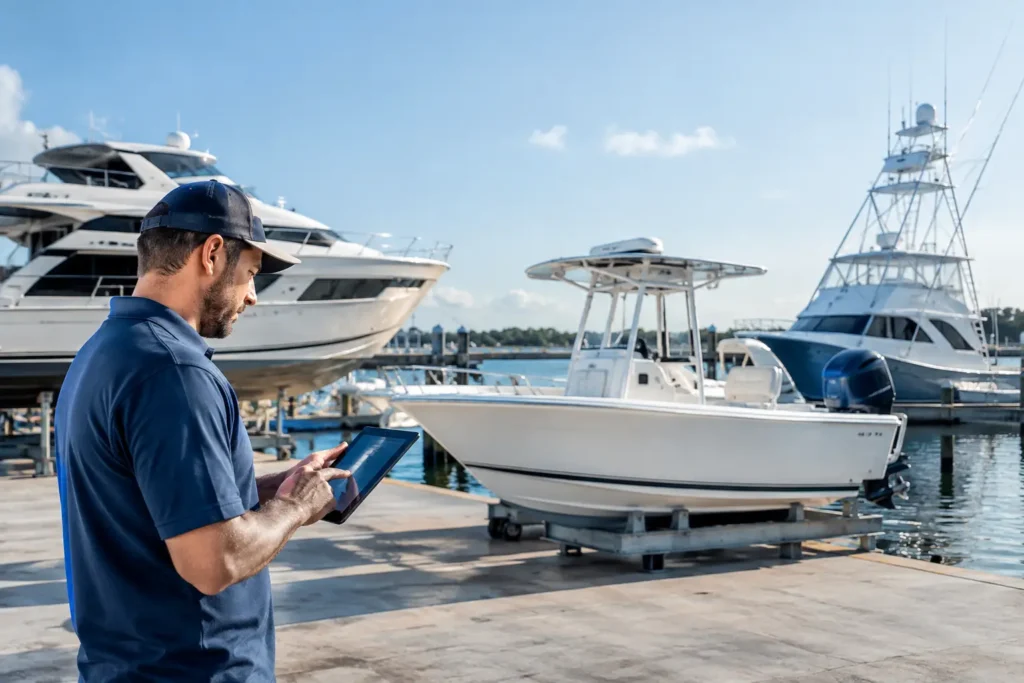
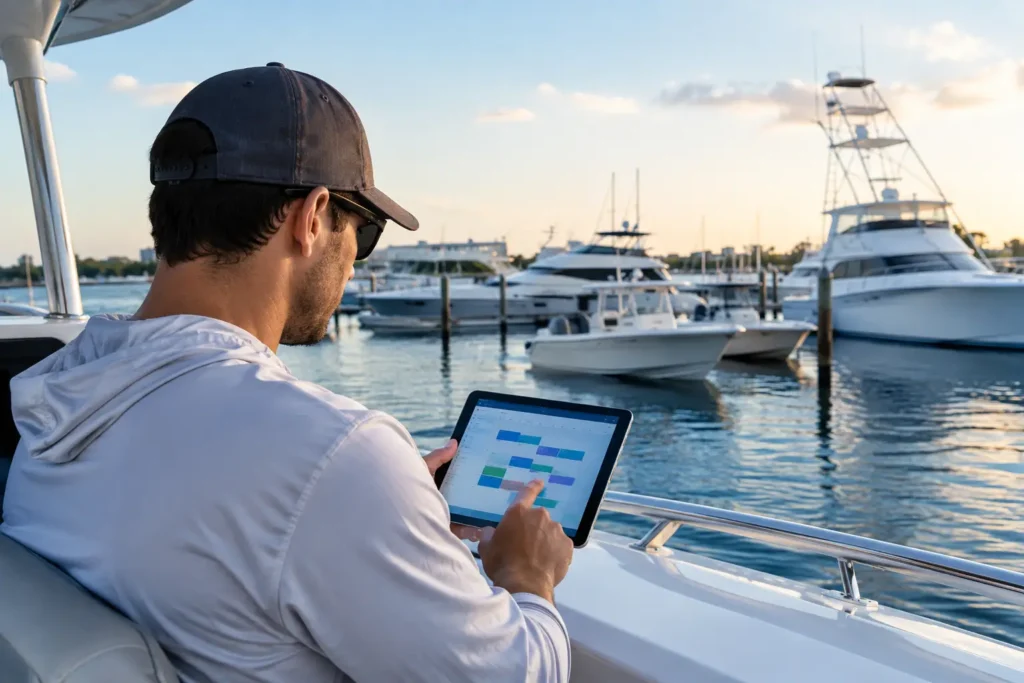
A work order scribbled on a notepad, an engine serial number buried in a text thread, and a parts count that exists only in someone’s head are not small inconveniences. They are the gaps where marine workflows break down. On a busy dock, that can mean a missed service interval, a technician waiting on a part, an owner calling for an update nobody can verify, or a crew member starting a shift without the information they need.
The better standard is simple: the work should follow the vessel, not the office. Whether you manage a center console, run a service department, operate a boatyard, or captain a large yacht, the information needed to make the next right decision should be available where the work happens.
What Marine Workflows Actually Cover
Marine workflows are the repeatable steps that move work from an issue or request to a documented result. They include routine maintenance, repairs, inspections, inventory, invoicing, crew handovers, fuel records, guest preparation, and communication with owners or customers.
The details change by operation, but the pattern is familiar. Someone identifies a need. The team records the vessel, system, symptoms, and priority. Work is assigned, parts are sourced, time is tracked, the result is documented, and the record is retained for the next service cycle.
That sounds straightforward until the work is happening in a wet engine room, at a remote marina, alongside multiple vessels, or during a turnaround with guests arriving in a few hours. Generic office software can store information, but it rarely understands Hull IDs, engine plates, service intervals, distributor catalogs, or the fact that a technician may have one hand on a phone and the other on a tool.
The Cost of Fragmented Dockside Work
Most marine businesses do not set out to create disconnected processes. They get there one practical workaround at a time. A technician uses text messages because it is fast. The office uses a spreadsheet because it is familiar. Photos live on personal phones. Parts are tracked on a shelf, then reconciled when someone has time. Accounting receives information after the work is already complete.
The problem is not any single tool. The problem is that each handoff creates an opportunity for missing details, duplicated entry, and delayed decisions.
For a service company, fragmented records can turn a simple repair into an expensive callback. The technician may diagnose the issue correctly but lack service history, warranty details, or an accurate inventory count. For a boat owner, it can mean paying for work without a clear record of what was replaced or when the next service is due. For yacht crew, it can mean critical knowledge disappears during a rotation or gets lost between watchkeeping shifts.
Paperwork also hides the true cost of work. If labor time, parts usage, and job notes are not captured as the job happens, managers are left estimating margins after the fact. That is not operational control. It is hindsight.
Build Workflows Around the Point of Work
A useful marine workflow starts with the person doing the job, not the person filing it later. That means mobile-first tools, simple inputs, and records that can be updated from the dock, salon, flybridge, workshop, or engine room.
Start with a clean vessel record
Every job should begin from a reliable vessel profile. At minimum, that includes the Hull ID, make and model, engines, equipment details, service history, documents, and owner or crew contacts. A complete record prevents the same questions from being asked on every visit and gives the team a dependable baseline when troubleshooting begins.
For boat owners, a centralized record also makes ownership easier. Receipts, maintenance costs, manuals, photos, and completed service can stay with the boat rather than getting scattered across email inboxes and file folders. When it is time to sell, insure, or troubleshoot the vessel, that history has real value.
Turn requests into structured jobs quickly
A customer might say, “The port engine is running hot.” A captain may report an alarm during a watch. The job should capture more than that sentence. Which vessel? Which engine? When did the problem begin? What were the readings? Is the boat underway, at the dock, or scheduled for a trip?
AI can help turn spoken requests, photos, and rough notes into usable job data, but the goal is not to add technology for its own sake. The goal is to reduce typing, preserve details, and create a clear next action. A good system lets the technician or crew member add context in seconds, then gives the office a job that can be scheduled, assigned, and tracked without re-entering the same information.
Track labor and parts while the work is fresh
Waiting until the end of the day to reconstruct labor is a common source of lost revenue. So is pulling parts from stock without recording them. The fix is not more paperwork. It is making time tracking and inventory updates easy enough to happen in the moment.
Barcode-based inventory management can connect a part to a specific job as it leaves the shelf. Technician time can be tied directly to that same work order. The office then sees what was used, what remains, and what needs to be reordered before the next job stalls.
There is a trade-off here. Overly detailed forms slow down experienced technicians and encourage shortcuts. Too little structure creates incomplete records. The right workflow captures the details needed for billing, accountability, and future diagnostics without making the person doing the work feel like a data-entry clerk.
Make the Office and the Dock Work From the Same Facts
The strongest operations do not force the field team and office team into separate realities. When a technician closes a job, that information should be ready for review, invoicing, customer communication, and accounting.
Two-way QuickBooks synchronization is one example of how this can reduce duplicate effort. The job, labor, parts, and customer data should not have to be manually rebuilt in one system after being recorded in another. But synchronization only helps if the source data is clean. A messy workflow simply moves messy information faster.
For managers, connected records improve visibility without requiring constant check-in calls. You can see jobs waiting on approval, technicians assigned to work, parts that need attention, and completed work ready for billing. For customers, better records make updates more credible because the answer is based on the actual status of the job, not a guess.
Large-Yacht Workflows Need Continuity Between People
On a large yacht, workflow is also about continuity. Crew changes, charter schedules, guest preferences, safety checks, fuel logs, and maintenance tasks all depend on information moving cleanly between people.
A watchkeeping note should not vanish when a crew member signs off. A guest preference should be accessible before the next trip, not rediscovered after an avoidable mistake. Fuel and maintenance records should support both daily operations and long-term planning.
Checklists matter here, but only when they are useful. A pre-departure checklist should reflect the actual vessel and operating plan, not a generic template copied from another boat. The same is true for safety rounds, engineering logs, provisioning, and turnover notes. Standardization creates consistency; vessel-specific detail makes it valuable.
Where AI Helps and Where It Does Not
AI earns its place when it removes friction from familiar work. It can extract data from documents, help identify equipment from photos, organize maintenance notes, suggest diagnostic paths, and convert a spoken request into a draft job. Those are practical gains when the team is busy.
It does not replace a qualified technician, captain, or engineer. A symptom-based suggestion is not a diagnosis. A generated checklist is not proof that an inspection occurred. The people responsible for the vessel still need to review the information, apply judgment, and document the final result.
That distinction matters in marine operations, where conditions change quickly and equipment failures can carry real safety consequences. Good technology supports professional judgment. It should never create false confidence.
A Better Standard for Everyday Operations
The best marine workflows are usually not flashy. They reduce calls asking where a job stands. They make it easier to find the right part, verify the last service, hand off a shift, and explain a bill. They give boat owners control of their records and give professionals a clearer view of the work moving through the business.
Yacht Logic was built from the water up around that reality: practical vessel operations, mobile dockside use, and records that stay connected from the first request to the completed job.
Start with the workflow causing the most daily friction. It may be job intake, labor tracking, inventory, maintenance records, or crew turnover. Fixing one weak handoff creates room for the next improvement, and over time, the boat, the crew, and the business all move with more control.