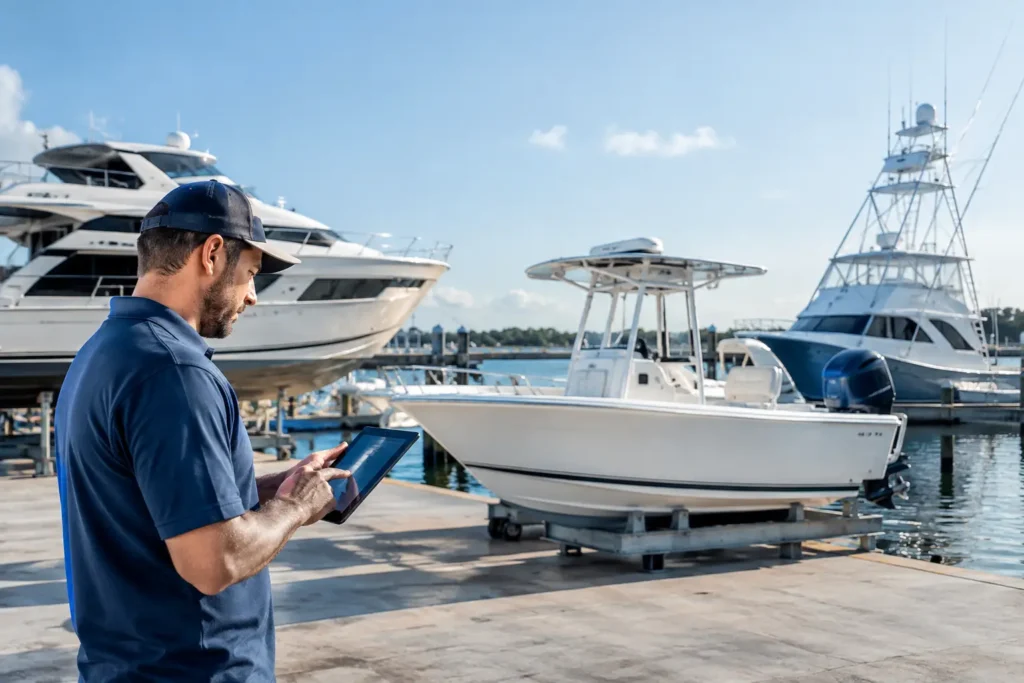
A technician is standing on a hot dock with a customer asking for an update, a faulty bilge pump in hand, and three more calls waiting. That is not the time to hunt through a paper work order, text the office for a part number, or re-enter hours after getting back to the shop. The best marine business software earns its place by making that dockside moment easier.
Marine operations do not run like a typical office. Work happens around weather windows, haul-outs, access restrictions, owner schedules, parts availability, and equipment that may have been modified several times since it left the factory. Software has to account for that reality. If it only works well from a desk, it is not solving the real problem.
What the Best Marine Business Software Must Do
The right system should reduce friction from first customer contact through final invoice. It should capture vessel details once, keep service history tied to the Hull ID and equipment, help technicians document work as it happens, and give the office a clear view of labor, parts, and job status.
For a small mobile service company, that may mean faster estimates, cleaner time tracking, and fewer missed charges. For a boatyard or marina, it can mean clearer work orders across multiple departments and less confusion when a vessel changes hands. For a large-yacht crew, the priority may be planned maintenance, watchkeeping, guest preferences, fuel records, and accountable handovers.
There is no single feature checklist that fits every operation. But the strongest marine platforms share one trait: they are built around the vessel and the people working on it, not around generic administrative workflows.
Mobile use is not optional
A system should work where the job happens. Technicians need to start a job, log time, add notes, attach photos, and record parts from a phone or tablet without waiting to return to the office. Captains and crew need to update logs from onboard, even when they are moving between tasks.
Mobile-first does not mean cramming desktop screens onto a smaller display. It means simple actions that match real work. Scan a barcode. Photograph an engine plate. Speak a task into the phone. Pull up a vessel’s prior repair history before opening a panel. Those small wins prevent the end-of-day scramble that leads to incomplete records and lost billable time.
Vessel records need to stay connected
A customer record alone is not enough. Marine businesses need a complete vessel profile that follows the boat through its service life. That includes manufacturer information, Hull ID, engine and generator details, serial numbers, installed equipment, documents, maintenance history, and prior recommendations.
When a customer calls about an intermittent engine issue, the team should be able to see the last service date, recent diagnostic notes, warranty information, and parts previously installed. When a new technician is assigned to the job, they should not be starting from zero.
This is also where document extraction can make a practical difference. Service manuals, invoices, registration records, and photos of equipment labels contain useful information, but only if that information becomes searchable operational data instead of another file buried in a folder.
Choose Marine Software by Workflow, Not Feature Count
A long feature list can make any platform sound capable. The better question is whether it handles the workflow that is slowing your operation down right now.
If estimates stall because part costs are scattered across emails, spreadsheets, and distributor portals, focus on catalog access, inventory control, and quote-to-job flow. If invoices are delayed, focus on technician time capture, parts usage, approvals, and accounting synchronization. If callbacks are hurting margins, focus on checklists, photos, service history, and clear closeout notes.
For larger yacht operations, look beyond job tickets. Crew teams may need scheduled maintenance, task assignment, watchkeeping records, guest preference tracking, provisioning coordination, fuel logging, and handover tools. A platform designed only for repair shops can leave these teams building workarounds in texts and spreadsheets.
Service companies need a clean path from call to cash
Marine service businesses often lose money in the gaps between the customer call and the final invoice. A service advisor takes the request. A technician visits the vessel. The technician finds additional issues. Parts are ordered. Labor is recorded later from memory. The invoice waits because nobody is certain what was used.
The best system creates a traceable path. A customer request becomes a job. The job is assigned to the right technician. Time, photos, notes, diagnostic findings, and parts are added in the field. The office can review the record, request approval if needed, and invoice without rebuilding the job from scratch.
QuickBooks integration matters here, but the depth of integration matters more. A one-way export can still create duplicate entry and errors. Two-way synchronization can reduce that burden, provided the chart of accounts, customer records, tax rules, and item setup are mapped correctly before launch.
Boatyards and marinas need visibility across the property
A boatyard is managing more than individual repairs. It is coordinating yard labor, subcontractors, haul-outs, storage, parts, customer expectations, and changing priorities across a physical property. A marina may also need a clear record of service work connected to slips, vessels, and owners.
Look for job status visibility that lets managers see what is awaiting approval, waiting on parts, in progress, or ready to invoice. The system should make accountability clearer without forcing supervisors to spend their day chasing updates by phone.
Inventory deserves close attention. Barcode-based tracking can help a yard know what is on the shelf, what was consumed on a job, and when stock needs replenishing. Still, inventory software will only be as accurate as the team’s receiving and issue-out habits. Good software makes those habits easier, but it cannot replace them.
Where AI Actually Helps Marine Operations
AI is useful when it turns messy field information into usable work, not when it adds another screen for the team to manage. The most valuable applications are practical: converting a spoken technician request into a job note, identifying equipment details from a photo, organizing symptoms into diagnostic guidance, or helping build a checklist based on the work being performed.
Consider a technician who says, “Port generator is overheating under load, customer reports it started after the last run to the Bahamas.” That should become a documented symptom attached to the correct vessel and asset, not a forgotten voice memo. The technician can then work from a structured diagnostic path while still applying professional judgment at the engine room door.
AI should support experienced people, not pretend to replace them. It cannot inspect corrosion, hear an abnormal bearing, or understand every undocumented modification on a 20-year-old vessel. But it can cut down the clerical work that keeps skilled marine professionals away from the work only they can do.
Questions to Ask Before You Buy
Before committing to a platform, ask the vendor to demonstrate the exact workflow your team uses most often. Do not accept a polished generic demo. Ask them to create a job from a customer call, assign it, log technician time from a phone, add a part, attach photos, generate an invoice, and show what lands in your accounting system.
Also ask who owns the data, how vessel records can be exported, what happens when connectivity is weak, and what onboarding looks like for technicians who are not interested in becoming software experts. The right provider should be comfortable talking through these operational details.
A good rollout starts small. Choose one service line, a few technicians, or a defined group of vessels. Clean up customer and vessel data before migration, set expectations for job documentation, and review adoption weekly. The goal is not to force every historical paper record into the system. The goal is to make the next job cleaner than the last one.
A Connected System Beats Another Isolated App
Many marine teams already have tools for accounting, weather, messaging, maintenance logs, and customer records. The issue is not a lack of software. It is the handoff between systems and the repeated entry that comes with it.
That is why connected ecosystems are gaining ground. A boat owner who keeps records, maintenance costs, weather, tides, and documents in one place can provide better information to a service provider. The provider can create a clearer work record. For crews, the same operational discipline supports better handovers and fewer missed details. Yacht Logic approaches this from the water up, connecting recreational boat management, professional service operations, and large-yacht crew workflows around the vessel itself.
The best choice is the one your team will use when the dock is busy, the weather is turning, and the office needs an answer now. Start there. Make the next work order easier to create, easier to complete, and easier to trust.