For decades, marine service businesses have relied on paper work orders, spreadsheets, phone calls, and filing cabinets to manage maintenance and repairs. The process is familiar: a technician receives a job, writes down the work, completes the paperwork, and eventually sends it back to the office for data entry and invoicing.
The problem? Familiar doesn’t always mean efficient.
Today, digital work orders are transforming how marinas, boatyards, yacht service companies, and marine maintenance teams manage work from the initial request through completion and billing.
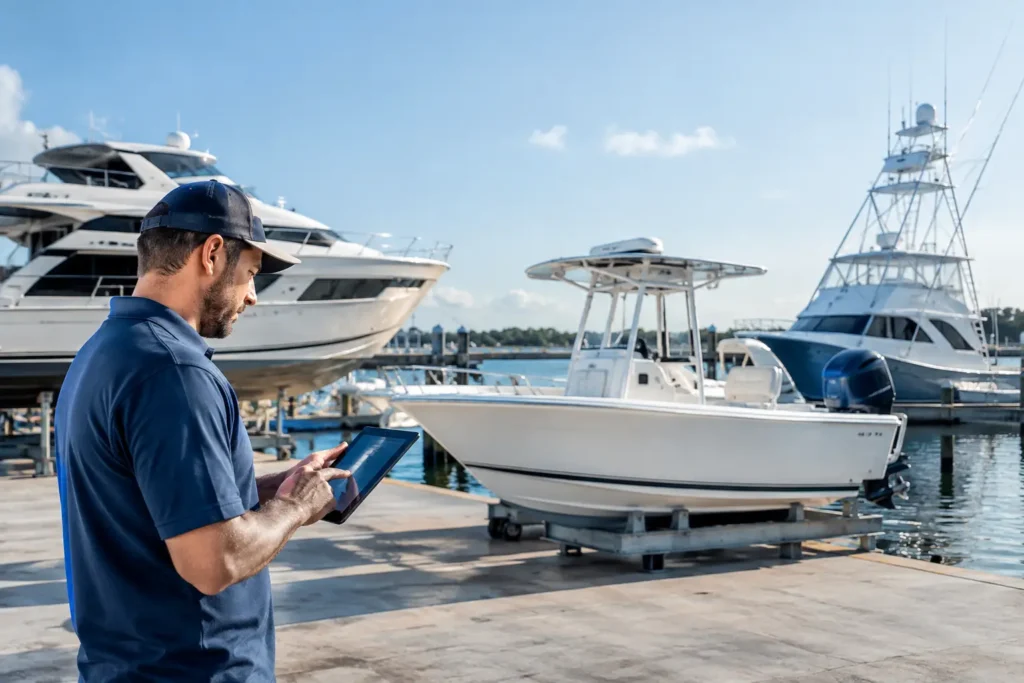
Instead of relying on paper, technicians can access job details from a mobile device, record labor and parts in real time, attach photos, update job status, capture customer approvals, and submit completed work directly to the office.
The result is a faster, more connected, and more accountable service operation.
What Are Digital Work Orders?
Digital work orders are electronic versions of traditional work orders managed through specialized software. They allow businesses to create, assign, schedule, track, and complete maintenance or service tasks digitally.
A modern digital work order can contain everything a technician needs to complete a job, including:
- Customer and vessel information
- Work instructions and checklists
- Technician assignments
- Labor and time tracking
- Parts and materials
- Photos and videos
- Service history
- Customer approvals and digital signatures
- Job status and completion details
Because this information is captured digitally at the source, it can flow directly into scheduling, inventory, billing, accounting, and maintenance records.
That eliminates one of the biggest problems with paper-based processes: having to enter the same information multiple times.
Why Paper Work Orders Are Holding Marine Businesses Back
Paper work orders may seem inexpensive, but their hidden costs can add up quickly.
A technician may spend time completing paperwork, only for the form to sit in a truck, office, or filing cabinet before reaching the person responsible for invoicing. Handwriting may be difficult to interpret. Parts may be forgotten. Labor hours may be missed. And managers may have little visibility into the job until someone provides an update.
These delays create several problems:
Slower invoicing. If labor, parts, or completed work aren’t captured promptly, invoices can be delayed.
Data-entry errors. Re-entering information from paper into accounting or service software creates unnecessary opportunities for mistakes.
Limited visibility. Managers can’t easily see which jobs are active, which technicians are available, or where a project is falling behind.
Lost information. Paper documents can be misplaced, damaged, or difficult to retrieve months or years later.
Poor historical records. Finding the details of a previous repair can become a manual search through folders and spreadsheets.
For marine businesses handling hundreds or thousands of service jobs each year, these inefficiencies can have a meaningful impact on profitability.
How Digital Work Orders Improve Marine Service Management
The biggest advantage of digital work orders is that they connect the field team with the office in real time.
A service request can become a work order, be assigned to a technician, and appear immediately on that technician’s mobile device. The technician can review the vessel’s history, complete the required tasks, record time, add parts, and upload photos without returning to the office.
Managers can then see the job’s status without having to call or track down paperwork.
This creates a more efficient workflow:
Request → Schedule → Assign → Perform → Document → Approve → Invoice
Every stage is connected.
Better Job Costing and More Accurate Billing
For marine service businesses, accurate job costing is critical.
A repair that appears profitable can quickly become unprofitable if technicians spend more hours than expected or additional parts are required. With digital work orders, labor and materials can be captured against the job as they happen.
That gives managers a clearer picture of:
- Estimated versus actual labor
- Parts and material costs
- Technician hours
- Additional work
- Job profitability
- Outstanding work
It also helps ensure that billable work doesn’t disappear between the dock and the accounting department.
When digital work orders integrate with invoicing and accounting systems, completed labor and parts can flow directly into the billing process. That can reduce administrative work while helping businesses invoice faster and more accurately.
Give Technicians the Information They Need
Marine technicians don’t always work from a comfortable office with a desktop computer. They may be on a yacht, in a boatyard, at a marina, or working in difficult conditions.
That makes mobile access an essential feature of a modern digital work order system.
Technicians should be able to use a phone or tablet to:
- View assigned jobs
- Access vessel and customer information
- Review previous service history
- Follow inspection checklists
- Record labor
- Add parts and materials
- Upload photos and videos
- Add notes
- Update job status
- Capture customer signatures
Offline functionality can be particularly valuable in marine environments where connectivity isn’t always reliable. Technicians can complete work offline and synchronize information when a connection becomes available.
Turn Every Work Order Into Useful Business Data
One of the most valuable advantages of digital work orders is the information they create.
A paper form documents what happened. A digital system can help you understand why it happened, how often it happens, and what it costs.
Over time, businesses can analyze service data to identify recurring equipment problems, average job completion times, technician workloads, maintenance costs, and frequently replaced components.
Managers can also use dashboards to monitor active jobs and identify bottlenecks before they become larger problems.
This turns work orders from simple administrative documents into a source of operational intelligence.
Digital Work Orders and Preventive Maintenance
Digital work orders aren’t limited to reactive repairs.
They can also support preventive maintenance programs by automatically generating recurring tasks based on dates, operating hours, usage, or other maintenance triggers.
For example, a system could generate an engine inspection work order based on operating hours or create recurring maintenance tasks for a vessel at scheduled intervals.
Technicians can complete standardized digital checklists, document inspection results, and record issues immediately.
This helps marine businesses move from reactive maintenance toward a more proactive approach to asset care.
What to Look for in Digital Work Order Software
Not every digital work order system is designed for marine operations. When evaluating software, look for features that support the realities of field service and marine maintenance.
Important capabilities include:
- Mobile access for technicians in the field
- Offline functionality for areas with unreliable connectivity
- Scheduling and dispatching
- Labor and time tracking
- Parts and inventory integration
- Photos, videos, and attachments
- Digital signatures and customer approvals
- Preventive maintenance scheduling
- Service history by vessel or asset
- Integration with accounting and invoicing
- Real-time dashboards and reporting
- Custom work order templates and checklists
The goal isn’t simply to digitize a paper form. It’s to create a connected workflow that eliminates unnecessary administrative steps.
The Future of Marine Service Is Paperless
Moving to digital work orders is about much more than replacing clipboards with tablets.
It’s about creating a faster connection between technicians, managers, customers, inventory, maintenance, and accounting.
When every job is documented digitally, businesses gain better visibility into their operations, technicians have the information they need, customers receive more transparent service, and management gains better data for making decisions.
At Yacht Logic Pro, we believe marine service businesses should spend less time managing paperwork and more time managing profitable work. Our platform connects maintenance, technicians, inventory, and financial workflows in one system, helping marine businesses eliminate manual processes and gain greater control over their operations.
Digital work orders are no longer simply a paperless alternative. They are the foundation of a more connected, efficient, and data-driven marine service operation.
Explore Yacht Logic Pro with a demo session today and see for yourself what you’re missing!