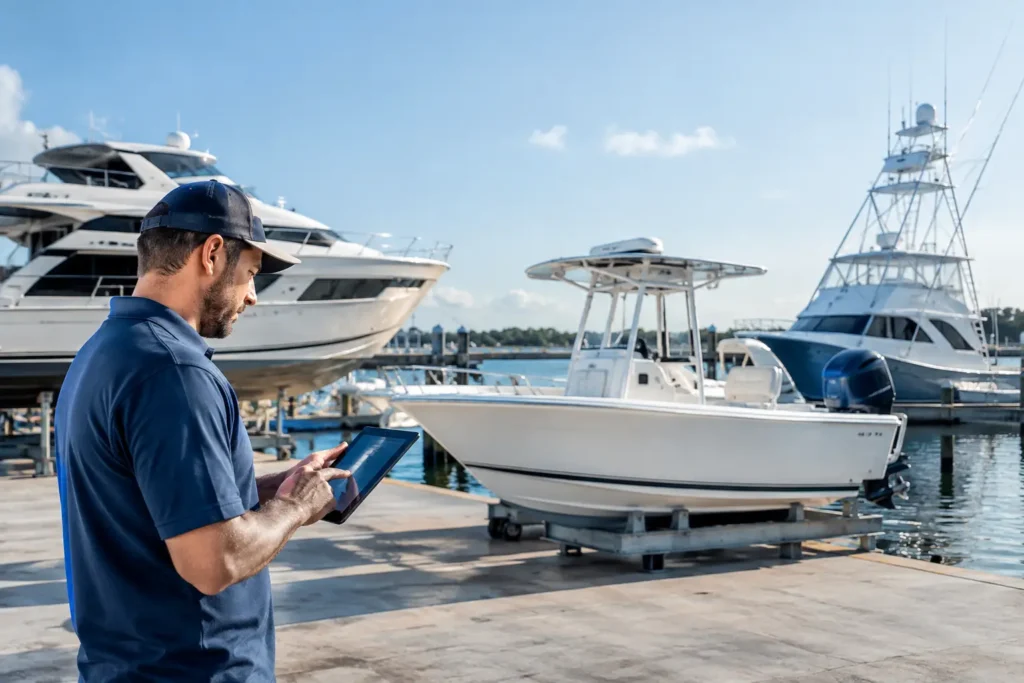
For marine businesses, maintenance can quickly become a daily battle against unexpected breakdowns, missed service intervals, parts shortages, and incomplete records. Spreadsheets and paper logs may work for a small operation, but as the number of vessels, assets, technicians, and service requests grows, manual maintenance becomes difficult to manage.
Maintenance planning software provides a more proactive approach. By bringing work orders, preventive maintenance, asset histories, inventory, technician schedules, and reporting into one system, marine businesses can reduce downtime, improve efficiency, and make better maintenance decisions.
Why Marine Businesses Need Maintenance Planning Software
Marine operations face unique maintenance challenges. Vessels contain complex mechanical and electrical systems, technicians may work across multiple locations, and equipment downtime can quickly become expensive.
Traditional maintenance methods often leave teams reacting to problems instead of preventing them. A spreadsheet might show when an engine was last serviced, but it does not necessarily remind a technician when the next service is due, connect the task to required parts, or provide instant access to the asset’s complete history.
Maintenance planning software changes that by centralizing maintenance information and automating routine processes.
The result is a shift from reactive maintenance to proactive maintenance. Instead of waiting for equipment to fail, teams can schedule service based on time, engine hours, meter readings, or equipment condition.
What Does Maintenance Planning Software Do?
At its core, maintenance planning software helps businesses organize, schedule, execute, and document maintenance activities.
The most valuable systems typically include:
- Work order management: Create, assign, prioritize, track, and complete maintenance tasks from a central platform.
- Preventive maintenance scheduling: Automate recurring maintenance based on dates, operating hours, usage, or other intervals.
- Asset management: Maintain a digital record of each asset, including service history, manuals, warranties, and maintenance documentation.
- Inventory management: Monitor spare parts, stock levels, consumption, and reorder points to reduce shortages and unnecessary inventory.
- Reporting and analytics: Track maintenance costs, downtime, labor, and performance metrics to support better decisions.
- Mobile access: Allow technicians to view work orders, update tasks, add notes, and upload photos directly from the vessel or job site.
Together, these capabilities create a single source of truth for maintenance operations.
How Software Helps Reduce Downtime
One of the biggest advantages of maintenance planning software is its ability to reduce unexpected equipment failures.
Automated preventive maintenance scheduling ensures critical services are performed when they are due. For example, a maintenance manager can schedule an engine service every 500 operating hours rather than relying on someone to remember when the work needs to be completed.
Technicians can also access an asset’s maintenance history, manuals, diagrams, and previous work orders from a mobile device. This information can make troubleshooting faster and reduce delays caused by searching through paper records or disconnected files.
Better planning also improves resource allocation. Managers can see technician availability, assign work according to skills, and make sure the necessary parts are available before a job begins.
The original research behind this content indicates that maintenance software can contribute to a 30–33% reduction in unplanned downtime, while improved inventory management can generate substantial parts-cost savings.
Choosing the Right Maintenance Planning Software
Not every maintenance platform is designed for the same operation. Marine businesses should evaluate software based on the complexity of their assets, number of technicians, vessel locations, and existing business systems.
A good solution should be easy for both maintenance managers and field technicians to use. If the system is difficult to navigate, adoption can become a major obstacle.
Look for features such as:
- Preventive maintenance automation for recurring service tasks.
- Comprehensive asset histories that keep maintenance information organized.
- Mobile functionality for technicians working on vessels and in remote locations.
- Offline access when reliable internet connectivity is unavailable.
- Digital checklists and forms for inspections and safety procedures.
- Inventory tracking to ensure critical parts are available when needed.
- Reporting and analytics for monitoring costs, downtime, and maintenance performance.
- Integration capabilities with accounting, ERP, or other operational systems.
Marine-specific functionality can be particularly valuable because yacht and vessel maintenance involves specialized equipment, operating conditions, and service requirements.
CMMS, EAM, and Predictive Maintenance
Maintenance planning software can take several forms. A Computerized Maintenance Management System (CMMS) primarily focuses on maintenance workflows, including work orders, preventive maintenance, asset histories, and inventory.
Enterprise Asset Management (EAM) expands beyond maintenance to manage the complete asset lifecycle, including procurement, financial information, and strategic asset planning.
More advanced solutions incorporate predictive maintenance and condition-based monitoring. Sensors can monitor equipment conditions such as temperature or vibration, while software analyzes the data to identify potential problems. In some systems, an abnormal reading can automatically trigger a work order.
These technologies allow maintenance teams to move beyond simply asking, “When is this service due?” and toward asking, “What does the equipment need right now?”
The Future of Marine Maintenance Is Proactive
Modern maintenance planning software is also becoming more intelligent through artificial intelligence, mobile technology, and integrations with IoT devices.
AI can analyze maintenance history to identify patterns, detect anomalies, assist with troubleshooting, and help maintenance teams make better decisions. Mobile apps give technicians access to critical information wherever they are, while integrations connect maintenance data with inventory, accounting, and operational systems.
For marine businesses, this creates a more connected maintenance process—from identifying a problem to assigning the work, sourcing parts, completing the repair, and documenting the result.
Make Maintenance More Predictable
The goal of maintenance planning software like Yacht Logic Pro is not simply to replace spreadsheets. It is to give marine businesses greater control over their maintenance operations.
By automating preventive maintenance, centralizing asset information, improving inventory visibility, and giving technicians access to information in the field, the right software can help reduce downtime, improve productivity, extend asset life, and control maintenance costs.
For marine service organizations still relying on paper records or disconnected spreadsheets, moving to a dedicated maintenance planning solution can be an important step toward a more proactive and profitable operation.
Ready to explore making the switch? Check out Yacht Logic Pro with a demo session and see for yourself.