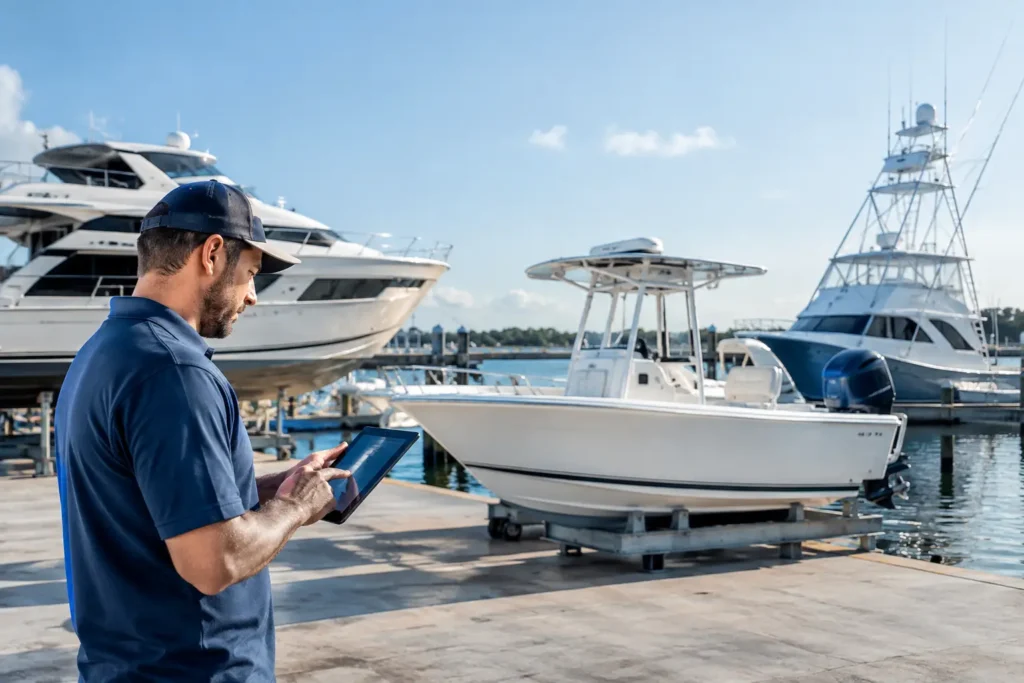
A technician finishes a pump replacement at 4:45 p.m., steps onto the dock, and sends a few notes to the office. By the time those notes become an invoice, a part number is missing, half an hour of labor has become a guess, and the customer has already asked when they will receive a bill. That is where manual invoicing vs mobile billing stops being an administrative preference and becomes an operational decision.
For marine service businesses, the work rarely happens near a desk. It happens in engine rooms, on floating docks, in boatyards, and aboard vessels where a signal can be spotty and the job can change without warning. Billing needs to follow the work, not wait for someone to reconstruct it at the end of the day.
What Manual Invoicing Actually Costs a Marine Business
Manual invoicing usually starts with good intentions. A technician keeps a paper work order, sends a text, calls in hours, or jots notes in a phone. Someone in the office later enters labor, parts, taxes, and customer details into accounting software. This can work for a one-person operation with a light workload and a simple rate structure.
The trouble begins when volume, crew size, or job complexity grows. Every handoff creates an opportunity for lost information. A part pulled from a van may never be recorded. A technician may remember the repair but not the exact serial number, engine hours, or time spent troubleshooting. A service writer may have to call back for clarification days later, when the details are no longer fresh.
Those small gaps affect more than invoice speed. They affect margin. If a shop misses even 15 minutes of billable time across several jobs each day, that adds up quickly over a month. The same goes for unbilled consumables, shop supplies, travel time, and parts that were installed but never made it onto the work order.
Manual processes also make customer communication harder. A boat owner who receives a vague invoice for “repair labor” has little context for the charge. A clear record of reported symptoms, diagnostic steps, labor entries, photos, parts used, and completed work gives the customer a much better understanding of what happened aboard their boat.
Manual Invoicing vs Mobile Billing at the Dock
Mobile billing puts job data into the hands of the person doing the work. Rather than asking technicians to remember details for later, it captures labor, parts, notes, photos, approvals, and status updates while the vessel is in front of them.
That does not mean a technician should be forced to spend half the job filling out screens. Good mobile workflows are built around short, practical actions: start a timer, scan a barcode, dictate a note, take a photo of an engine plate, and mark a task complete. The goal is to remove the end-of-day scramble, not replace it with another burden.
The difference is especially clear on jobs that evolve. A customer calls about an overheating engine. The initial diagnosis points to an impeller, but the technician finds a damaged hose and corrosion around a fitting. In a manual system, those changes may live in a text thread, a marked-up paper ticket, or the technician’s memory. In a mobile billing workflow, the technician can document the findings, add approved parts and labor, and give the office a current view of the job before the boat leaves the dock.
For marina operators and boatyards, this visibility also helps coordinate work across multiple vendors, slips, and vessels. The office can see what is awaiting approval, what is in progress, and what is ready to invoice without hunting through clipboards or calling every technician.
Where Mobile Billing Delivers the Biggest Gains
The strongest case for mobile billing is not simply faster invoices. It is cleaner operational data from the first customer call through payment and future service.
Labor is captured when it happens
Time tracking done at the end of the day is often approximate, even with experienced technicians. Mobile timers and job-based time entries make it easier to distinguish travel, diagnosis, repair, sea trial, and waiting time. Managers can review labor before an invoice is sent instead of trying to resolve questions after a customer disputes a charge.
Parts stop disappearing into the gap
Marine parts management gets complicated fast. A technician may use stock from a truck, a shop shelf, or a special-order delivery that arrived directly at the yard. Barcode-based inventory workflows can connect the item used to the job where it was installed. That supports better replenishment, more accurate job costing, and a clearer service history for the vessel.
Documentation becomes part of the deliverable
Photos of corrosion, worn belts, cracked hoses, hour meters, and completed repairs are not just nice to have. They help technicians explain recommendations, protect the business when questions arise, and give boat owners a useful maintenance record. For larger yachts, detailed records matter even more when crew rotations and vendor changes can separate the person who observed an issue from the person responsible for resolving it.
The office is no longer the bottleneck
A mobile workflow does not eliminate the need for office review. It gives the office better information sooner. Service managers can check job entries, verify rates, apply taxes, and move approved work toward invoicing without retyping every line from paper. When billing data connects with two-way QuickBooks sync, the accounting process can stay aligned without creating a second manual entry job.
Mobile Billing Is Not Automatically Better for Every Job
There are cases where manual invoicing remains reasonable. A captain completing an occasional small repair for a known owner may not need a full dispatch and billing workflow. A shop with limited cell coverage in a remote yard needs an application that can handle real dockside conditions, including offline or delayed synchronization. And no software fixes unclear rates, poor estimating, or technicians who have never been trained on what must be documented.
The right question is not, “Can we get rid of paper?” It is, “Where does information get lost between the boat and the invoice?”
If your team performs a handful of straightforward jobs each week, a simple process may be enough. If you manage multiple technicians, service trucks, changing job scopes, inventory, or repeat maintenance for a fleet of vessels, the manual approach usually starts costing more than it saves.
What a Dockside Billing Workflow Should Look Like
A practical mobile process should match the rhythm of a marine service call. The job is created with the vessel, customer, location, concern, and scheduled work. On arrival, the technician reviews the task and starts tracking time. As work progresses, they add observations, parts, photos, and recommended follow-up work.
When the repair is complete, the technician records the final labor and marks the job ready for review. The office can see what changed, confirm pricing, prepare the invoice, and send it without rebuilding the job from scratch. The boat owner receives a bill supported by useful detail, while the service business retains a searchable vessel history for the next call.
That history is where the system earns its keep. The next technician should be able to see prior service, installed parts, recurring faults, and relevant photos before opening the engine hatch. Less time spent asking, “What happened last time?” means more time fixing the right problem.
Choosing Between Manual Invoicing and Mobile Billing
Before changing systems, look at a week’s worth of completed jobs. Compare the technician’s original notes with the final invoices. Check how often labor was estimated after the fact, how many parts were added late, and how long invoices waited after the work was done. Also look at customer questions and credits. They often point directly to missing documentation.
Then test the workflow with the people who will use it in the field. A system that looks polished from an office chair but requires too many taps with greasy hands will not survive a busy service season. Ask technicians whether they can log time, parts, and notes in under a minute at natural points in the job. Ask office staff whether they can review work without chasing details by phone.
Yacht Logic Pro is built from the water up for this exact handoff: turning dockside work into traceable operational data, rather than asking marine teams to force their day into generic office software.
The best billing process is not the one with the most screens or the most paper. It is the one that lets a technician finish the work, document it clearly, and leave the dock knowing the business has captured what it earned.