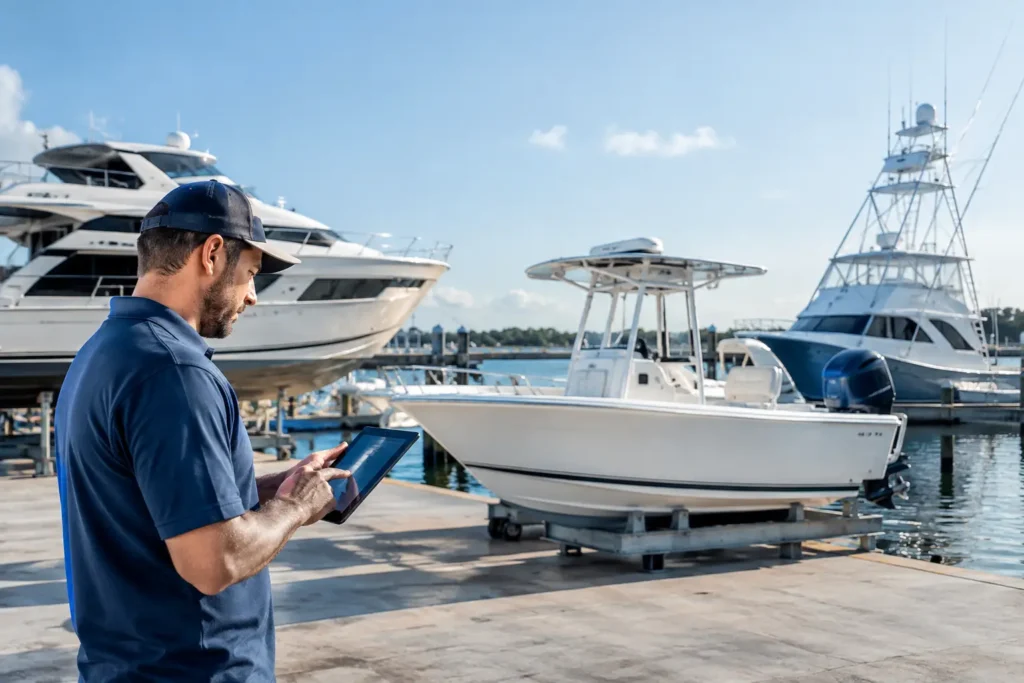
A technician is standing in a hot engine room, a customer is waiting for an update, and the part needed for the repair may or may not be on the shelf. That is where the marine ERP vs spreadsheets decision stops being an office-software debate. It becomes an operational question: can your team find the right information, act on it, and leave a record without heading back to a desk?
Spreadsheets have earned their place in marine operations. They are familiar, flexible, and easy to start. A small service business can build a basic job tracker in an afternoon. A captain can log maintenance costs, fuel use, and vendor contacts in separate tabs. But as vessels, work orders, technicians, and inventory lines multiply, the spreadsheet that once kept things organized can become the source of the next missed charge, delayed repair, or hard-to-answer customer question.
A marine ERP is not automatically the right answer for every operator. The right move depends on the volume of work, the complexity of your inventory, and how much time your crew spends reconciling information after the work is already done.
Why Spreadsheets Work Until They Do Not
A spreadsheet is useful when one person owns the process, the work is limited, and the data does not need to move quickly between the dock, shop, office, and vessel. For a boat owner tracking annual service, it may be all that is needed. For a small yard with a handful of jobs each month, a shared workbook can provide a workable starting point.
The trouble starts when the spreadsheet becomes the operating system for a growing business. One file tracks estimates. Another tracks work orders. A technician sends hours by text. Parts are counted on a clipboard. Invoices are entered later. The office spends Friday figuring out which version of the information is correct.
That is not a staff problem. It is a process problem. Marine work happens where the boat is: in the yard, at the fuel dock, on a sea trial, in an engine room, or aboard a vessel that is leaving before the office opens. A system built around desk-bound updates will always create lag between the work performed and the record of that work.
The hidden cost is rework
Spreadsheets rarely show their cost as a single line item. It appears as a technician who forgets a part number, a service advisor who calls for an update that was already given on the dock, or a manager who cannot confirm whether a backordered item belongs to a specific job.
Then there is billing leakage. If labor, travel time, consumables, and parts are captured in separate places, some of them will not make it onto the invoice. Even a small percentage of missed charges can outweigh the monthly cost of purpose-built software.
For yacht crews, the equivalent problem is continuity. A maintenance history scattered across personal files, paper logs, and individual crew knowledge makes handovers harder and leaves captains chasing records when an owner, surveyor, insurer, or vendor asks a simple question.
Marine ERP vs Spreadsheets: The Operational Difference
The core difference is not that an ERP stores more data. A spreadsheet can hold thousands of rows. The difference is that marine ERP software connects the data to the workflow where it is created.
When a technician begins a job, the system can tie their time, notes, photos, parts, vessel details, and customer communication to the same work order. When a barcode is scanned, inventory changes at the point of use rather than during a later count. When a service writer updates a job, the office sees it without chasing screenshots, texts, or a revised workbook.
That connection matters because marine work is vessel-specific. The engine model, serial number, Hull ID, prior repairs, warranty status, recommended service intervals, and installed equipment all affect what comes next. A generic spreadsheet can hold those details, but it does not naturally prompt the right person to use them at the right time.
A marine-focused platform should also accommodate the reality that connectivity is not guaranteed and hands are often dirty. Mobile-first workflows, quick search, photo capture, voice input, checklists, and simple time entry are not extras. They determine whether the team actually uses the system.
Signs You Have Outgrown the Workbook
There is no universal job-count threshold. One highly specialized yacht service company may need structured workflows with only a few active projects, while another shop can manage a larger volume with basic tools. Still, several signals are hard to ignore.
You have likely outgrown spreadsheets when multiple people edit the same records, when the office regularly re-enters information from paper or text messages, or when technicians cannot see complete vessel history from the dock. The same is true when parts are frequently ordered twice, inventory counts cannot be trusted, or invoices wait because labor and materials have not been collected.
Another clear sign is reporting by detective work. If answering “What did we do on this boat last season?” requires searching email, calling a technician, and opening three tabs, your records are not serving the operation. They are slowing it down.
For captains and crew, the trigger may be less about revenue and more about risk. If a watchkeeping log, safety check, guest preference, fuel record, or maintenance task depends on one person remembering where it lives, the vessel needs a better shared source of truth.
What a Good Marine ERP Should Actually Do
Do not replace a spreadsheet with an oversized corporate system that creates more data entry than it removes. The best marine ERP for your operation is one your team can use during real work, not one that looks impressive in a conference-room demo.
Start with the workflows that are costing you the most time. For service businesses, that usually means job creation, customer and vessel records, technician time, estimates, parts, inventory, invoicing, and accounting synchronization. For boatyards and marinas, it may also include storage, work scheduling, vendor coordination, haul-outs, and communication across departments. For large yachts, priorities often include planned maintenance, crew tasking, documents, watchkeeping, guest information, fuel logs, and handover records.
The system should make vessel information easy to retrieve. A technician should be able to pull up an engine plate, prior diagnostic notes, installed equipment, and previous work without asking the office to email a file. It should also create traceable records automatically as work moves forward.
Accounting matters, but it should not dictate the dockside workflow. If your business uses QuickBooks, look for two-way synchronization that reduces duplicate entry while preserving the information your bookkeeper needs. The goal is not to turn technicians into accountants. The goal is to give accounting complete, timely records from work that is already happening.
AI can help here when it is applied to practical tasks. Converting a spoken service request into a job, extracting equipment details from a photo, suggesting diagnostic steps from symptoms, or turning a messy inventory description into a usable part record saves time because it removes repetitive typing. AI that cannot understand the difference between a generator issue and a guest-cabin preference list is just another screen to manage.
Make the Change Without Stopping the Yard
A full system change can go sideways when a business tries to migrate every old file, standardize every process, and train everyone at once. Start narrower. Pick one workflow that creates visible friction, such as technician time tracking or parts issued to work orders. Build the vessel and customer records needed for that workflow, then run it consistently.
Keep your existing spreadsheet available as a reference during the transition, but give the new system a clear job to own. If both tools are treated as the official record forever, the team will keep duplicating work and the change will fail.
Training should happen around real jobs. Have a service writer create a work order for a current customer. Have a technician clock time and attach photos from an active repair. Have the parts counter scan or assign materials used. People adopt tools when they can see fewer phone calls, faster approvals, and cleaner invoices by the end of the day.
Assign one operational owner who can answer questions, collect feedback, and hold the process steady for the first few weeks. That person does not need to be an IT specialist. They need to understand how work moves through your shop, yard, or vessel.
The Better Question to Ask
The real question is not whether spreadsheets are bad. They are useful tools, especially for simple tracking and one-off analysis. The question is whether your current system gives your people control when the work is moving fast.
For a recreational owner, centralized digital records may be enough to bring order to maintenance spending and service history. For a busy marine operation, connected workflows can protect billable time, reduce inventory surprises, and give customers answers before they have to ask twice. Yacht Logic was built from the water up for that reality: information should follow the vessel and the work, not remain trapped in office files.
Start with the friction your crew feels most often. If a better record at the dock means one less missed part, one faster customer update, or one cleaner handover, the change has already started paying for itself.