Running a successful marine service business means juggling technicians, work orders, customer communication, inventory, invoicing, and scheduling—all while trying to deliver exceptional service. When those processes rely on paper forms, spreadsheets, text messages, and disconnected software, mistakes become inevitable.
That’s why digital workflows have become one of the most important investments marine businesses can make.
A digital workflow connects every stage of your operation—from the first customer inquiry to the final invoice—into one streamlined process. Instead of chasing paperwork or manually updating multiple systems, your team works from a single source of truth that improves efficiency, accountability, and profitability.
For marine businesses looking to modernize operations, platforms like Yacht Logic Pro combine digital workflows, automation, technician management, inventory tracking, and financial integration into one connected system designed specifically for the yachting industry.
What Is a Digital Workflow?
A digital workflow is the process of replacing manual tasks with connected digital systems that automatically move information from one step to the next.
Rather than relying on handwritten work orders, spreadsheets, emails, or printed invoices, digital workflows ensure information is captured once and shared everywhere it needs to go.
For example, a typical marine service workflow can look like this:
- Customer submits a service request.
- A work order is automatically created.
- The appropriate technician is assigned.
- Parts are reserved from inventory.
- Photos and service notes are uploaded from the dock.
- Customer approvals are collected digitally.
- An invoice is generated automatically.
- Financial records update instantly.
Instead of multiple people entering the same information several times, every department works from the same live data.
Why Digital Workflows Matter
Many marine businesses still lose valuable time to repetitive administrative work.
Common challenges include:
- Duplicate data entry
- Lost paperwork
- Scheduling conflicts
- Inventory inaccuracies
- Delayed invoicing
- Poor visibility into technician progress
Digital workflows eliminate these bottlenecks by connecting people, data, and processes.
The results include:
Faster Operations
Automated routing removes unnecessary administrative work, allowing technicians and office staff to focus on servicing customers rather than updating paperwork.
Better Accuracy
Entering information once dramatically reduces errors caused by manual transcription or duplicate entry.
Real-Time Visibility
Managers can instantly see:
- Job status
- Technician locations
- Parts availability
- Customer approvals
- Outstanding invoices
Instead of calling employees for updates, the information is already available.
Improved Customer Experience
Customers receive faster estimates, clearer communication, digital reports, and quicker invoicing, creating a more professional experience that builds trust.
Digital Workflows vs. Digitization
Many businesses believe they’re “digital” simply because they’ve replaced paper with PDFs or spreadsheets.
That’s digitization.
A true digital workflow goes much further.
Digitization converts paper into digital files.
Digital workflows automate what happens next.
For example:
Scanning a technician’s paper report into a PDF stores the document digitally.
A digital workflow automatically:
- updates the work order,
- records labor,
- deducts inventory,
- generates an invoice,
- notifies the customer,
- and updates financial reports.
The difference is automation.
Five Steps to Build Better Digital Workflows
Creating digital workflows doesn’t require rebuilding your entire business overnight.
Start with one process.
1. Map Your Current Process
Identify every step from beginning to end.
Ask questions like:
- Where do delays happen?
- What requires duplicate entry?
- Which tasks consume the most administrative time?
- Where do mistakes occur most often?
Understanding your current workflow reveals opportunities for improvement.
2. Simplify Before Automating
Automation should improve a process—not automate unnecessary complexity.
Remove redundant approvals, eliminate duplicate forms, and simplify communication before introducing software.
3. Choose Software Built for Your Industry
Generic workflow software often requires extensive customization.
Marine businesses benefit from solutions designed specifically for service operations.
Yacht Logic Pro connects scheduling, maintenance management, inventory control, customer communication, technician reporting, and invoicing in one platform, reducing the need for multiple disconnected applications.
4. Train Your Team
Technology succeeds when people actually use it.
Introduce new workflows gradually, gather employee feedback, and provide training that demonstrates how automation makes daily work easier rather than more complicated.
5. Measure and Improve
Digital workflows should evolve with your business.
Track metrics such as:
- Average job completion time
- First-time fix rate
- Invoice turnaround
- Technician utilization
- Customer satisfaction
Small improvements over time produce significant operational gains.
Digital Workflows in Marine Service
Imagine receiving a customer call about a generator issue.
With traditional processes, someone writes down the request, schedules a technician manually, checks inventory separately, emails paperwork, and later enters everything into accounting.
With an integrated digital workflow:
- The customer request creates a work order instantly.
- Technician schedules update automatically.
- Required parts are reserved.
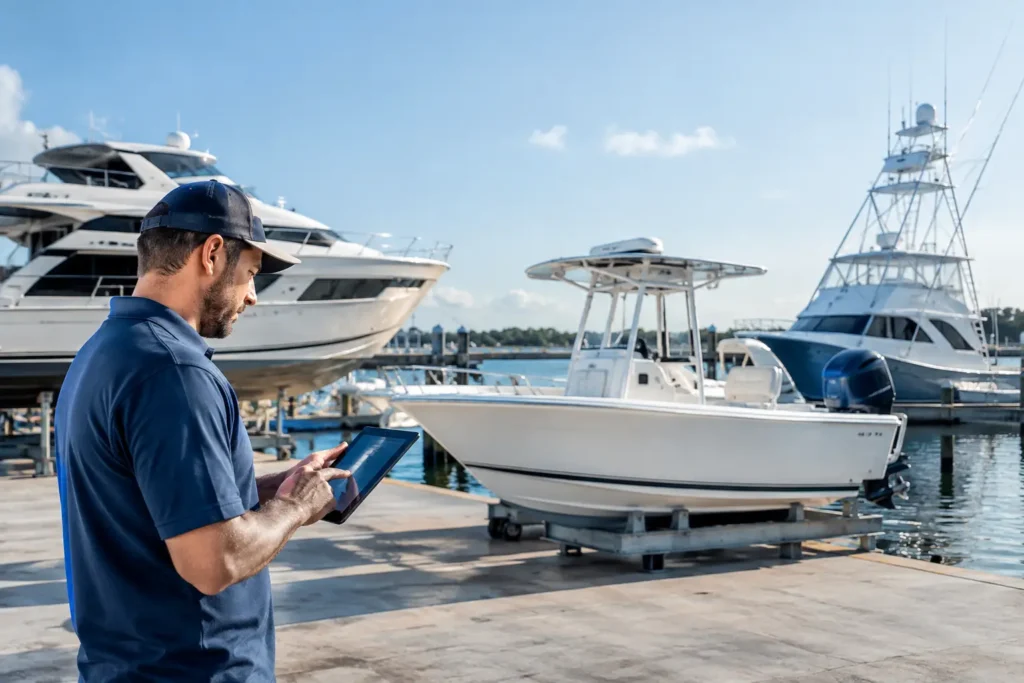
- The technician completes the inspection on a tablet.
- Photos and notes sync immediately.
- Inventory adjusts automatically.
- The invoice is generated as soon as the job closes.
Every department stays synchronized without additional administrative effort.
This is the kind of operational efficiency modern marine businesses increasingly expect.
Why Integration Matters
The biggest advantage of digital workflows isn’t simply automation—it’s integration.
When scheduling, inventory, CRM, maintenance history, accounting, and customer communication operate separately, every disconnected system creates opportunities for errors.
Integrated platforms eliminate those silos.
Rather than moving information between multiple applications, your entire business operates from one connected ecosystem.
That’s where solutions like Yacht Logic Pro stand out by giving marine service businesses complete operational visibility while reducing manual work across every department.
The Future of Marine Operations Is Digital
Customer expectations continue to rise, while labor shortages and operational costs make efficiency more important than ever.
Digital workflows help marine businesses:
- Complete more work with existing staff
- Reduce costly administrative errors
- Improve technician productivity
- Deliver better customer experiences
- Increase profitability through automation
Businesses that continue relying on paper processes and disconnected systems will find it increasingly difficult to compete.
Digital transformation isn’t about replacing people—it’s about giving your team better tools.
Ready to Streamline Your Operations?
Whether you’re managing a small service company or a growing yacht maintenance operation, implementing digital workflows is one of the fastest ways to improve efficiency and profitability.
Yacht Logic Pro was built specifically for marine service businesses, bringing together maintenance management, technician scheduling, inventory, customer communication, financial integration, and intelligent automation into one powerful platform.
The result is less paperwork, greater visibility, faster service, and more time to focus on what matters most—delivering exceptional experiences for your customers while growing your business.
Book a free demo today to see how your workflow can change for the better!