A failed bilge pump does not care whether the office has caught up on its paperwork. Neither does a guest arrival, an overdue engine service, or a technician standing on a hot dock trying to identify the correct impeller. Yacht automation earns its place when it turns those moments into clear next actions instead of another text thread, paper log, or trip back to the office.
The goal is not to put more screens on a boat. It is to reduce the repeated work that slows down owners, crews, and marine service teams: re-entering job details, hunting for manuals, typing handwritten timecards, checking three places for inventory, and asking who last handled a task. Built from the water up, useful automation keeps the vessel moving while creating records people can trust later.
What yacht automation should actually do
There is a major difference between digitizing a form and automating a workflow. A digital form may replace a clipboard, but it still depends on someone remembering what to enter, where to enter it, and who needs to see it. Automation carries the information forward.
For a recreational owner, that might mean a photo of an invoice becoming a categorized maintenance record tied to the boat, its cost, and the vendor who completed the work. For a service company, a spoken note from a technician can become a job update, tracked labor time, recommended parts, and a customer-ready record. For a large-yacht crew, an issue reported on watch can be assigned, documented, and passed cleanly to the next shift.
Good yacht automation connects three things that often stay separate: what happened on the vessel, who acted on it, and what needs to happen next. That connection is where the time savings come from. It also creates operational control. When a pump fails again six months later, the captain or technician should be able to see the prior symptom, repair, parts used, and labor without reconstructing the story from memory.
The work worth automating first
The best place to start is not the flashiest feature. Start with the workflow that is frequent, expensive, or most likely to create a bad handoff. In marine operations, a few areas consistently deserve attention.
Maintenance records and recurring work
Every vessel has repeating obligations: engine services, generator checks, safety inspections, seasonal preparation, filter changes, zincs, and more. The difficulty is rarely knowing that maintenance exists. The difficulty is keeping each task tied to the right asset, interval, invoice, and service history.
Automation can flag upcoming work based on dates, hours, or defined intervals. More importantly, it can preserve the evidence that work was done. That matters for resale, warranty conversations, insurance documentation, charter standards, and the simple reality of diagnosing a problem that has already been repaired once.
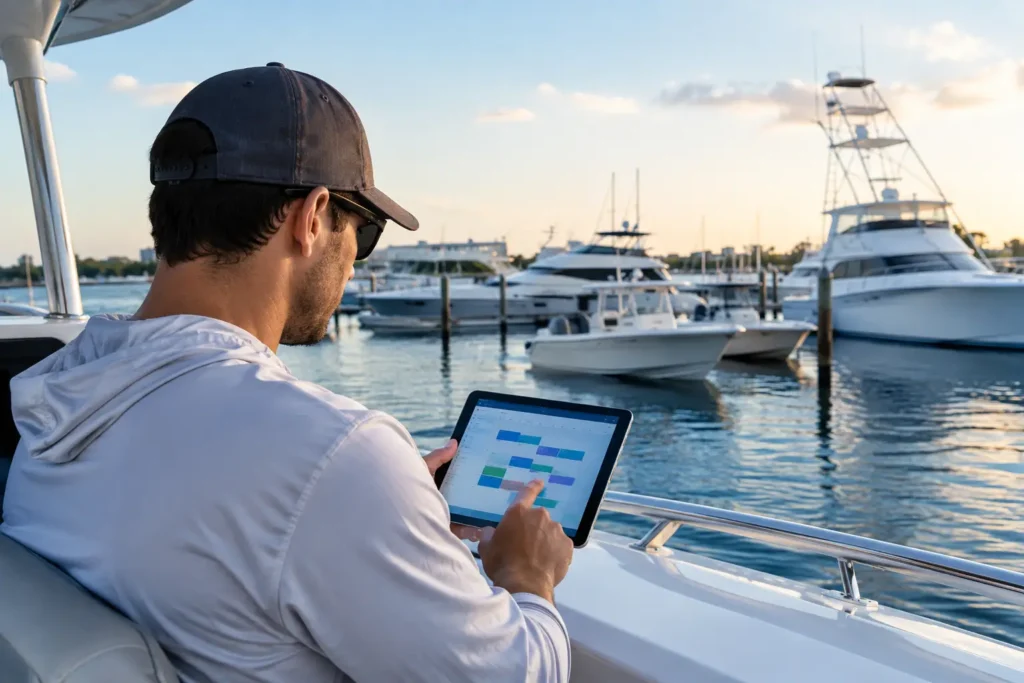
For boat owners, centralized records also make spending visible. A maintenance history that shows costs by system gives a clearer picture than a pile of receipts. The data will not make repairs cheaper, but it can stop surprise expenses from becoming unexplained expenses.
Dockside service operations
Marine service teams lose time in the gaps between the customer call, the work order, the technician visit, the parts counter, and the invoice. If job details live in texts, labor is on paper, and inventory is tracked somewhere else, every handoff creates room for delay and missed billing.
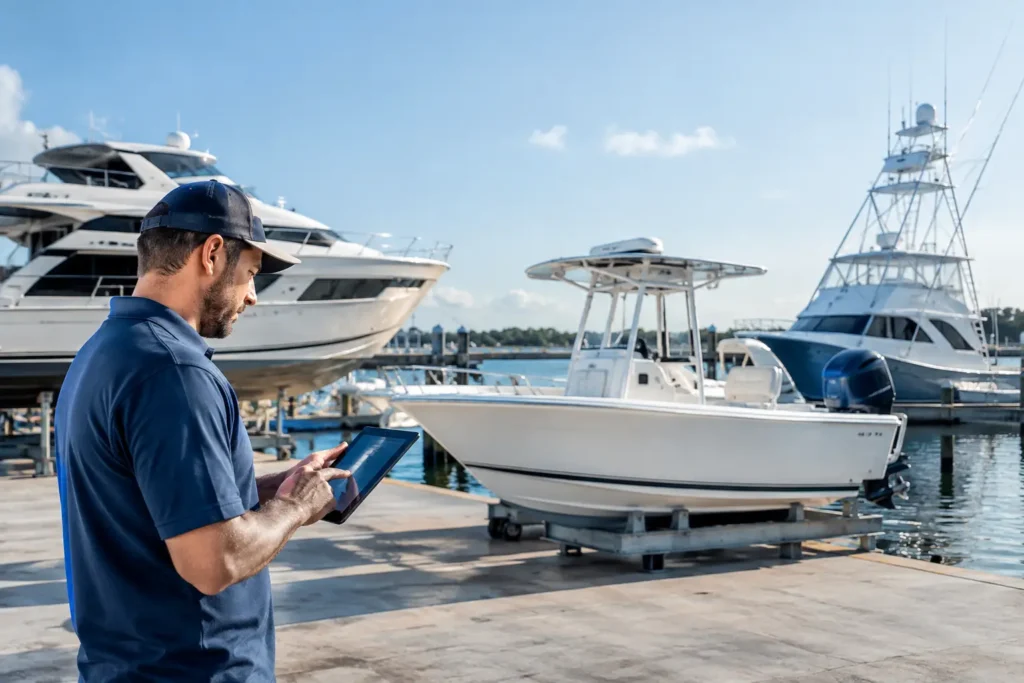
A mobile-first workflow lets a technician create or update a job at the boat, capture photos, record labor, identify installed parts, and document findings before leaving the dock. The office should not have to interpret a wet, abbreviated note at the end of the day.
This is where practical AI can help. A technician can describe a symptom in plain language or scan an engine plate, then use that information to organize the job record and guide the next diagnostic step. AI should reduce data entry and surface useful context. It should not pretend to replace a qualified mechanic’s judgment.
Inventory and parts accountability
A missing $20 fitting can cost far more than $20 when it delays a job, sends someone to a supplier, or holds up a departure. Inventory automation is especially valuable when parts move between trucks, shops, dock boxes, and vessels.
Barcode-based tracking can record what was received, where it is stored, what was used on a job, and when a reorder point is reached. The benefit is not simply a cleaner stockroom. It is the ability to connect parts consumption to real labor, real vessels, and real invoices.
The trade-off is discipline. Barcodes and catalog data only work if the team scans items consistently and keeps part information clean. Start with high-turn, high-value, or frequently misplaced items before trying to catalog every washer in the warehouse.
Crew handoffs, watchkeeping, and guest readiness
On larger yachts, operational knowledge often sits in people’s heads. That becomes a risk during crew rotation, a busy crossing, or a guest trip with changing preferences and last-minute requests. A proper digital watch log and task system keeps the vessel’s operating picture available to the people who need it.
Automation can route a reported issue to the right department, attach it to a piece of equipment, notify the appropriate crew member, and retain the history through completion. It can also support recurring checklists for safety rounds, departure preparations, guest cabin readiness, fuel logging, and routine machinery checks.
The right level of detail depends on the program. A 35-foot center console does not need the same workflow as a 145-foot yacht with rotating crew. But both benefit from one principle: the record should be easy to create at the point of work and easy to find later.
Yacht automation needs clean vessel data
Automation is only as reliable as the information behind it. Vessel name, Hull ID, equipment model, serial number, engine hours, service intervals, and supplier details are not glamorous data points. They are the foundation for useful alerts, accurate job histories, and parts identification.
This does not mean every operation needs a long implementation project. It means setting a practical baseline. Build the boat profile, identify the equipment that drives most maintenance and downtime, and standardize how work is labeled. Use photos of engine plates, manuals, receipts, and completed repairs whenever possible. A photo captured at the engine room door is better than a detail someone plans to enter later and forgets.
For service businesses, the same principle applies to customers, vessels, technicians, labor rates, and inventory locations. If a job is closed without labor or parts attached, the system cannot produce a reliable margin picture. If a task is assigned without a clear asset, recurring patterns remain hidden.
Where automation can go wrong
Marine teams have good reason to be skeptical of software. Many products are built for a desk, assume consistent internet access, or force dockside work into generic office categories. That creates another chore instead of removing one.
The warning signs are straightforward: too many required fields, workflows that take longer than a phone call, reports nobody uses, and automation rules that generate noise rather than direction. A captain should not need to become a database administrator. A technician should not have to choose from five screens just to log two hours and a part.
There is also a human side. Clear accountability is useful, but automation should support the crew and service team rather than feel like surveillance. Explain what is being tracked, why it matters, and how the information will make their work easier. Adoption improves when people see that good records stop repeated questions, missed parts, and after-hours calls for information they already entered.
A sensible way to put yacht automation to work
Choose one workflow and run it until the team trusts it. For example, a service business may begin with mobile job creation, technician time tracking, and parts used. Once those records are consistent, it can connect inventory and accounting. A yacht crew may begin with watchkeeping and recurring machinery checks, then add guest preferences and fuel records.
Measure the result in operational terms: fewer unbilled labor hours, less time spent finding service history, fewer duplicate parts orders, cleaner handoffs, and faster response to recurring faults. Those are better measures than how many features were turned on.
Yacht Logic AI is designed around this reality, from owner records and weather information to dockside service workflows and crew operations. The common thread is simple: useful information should move with the boat and the people doing the work, not wait for someone to get back to a desk.
The next time a task is written on a scrap of paper, sent in a text, or left to memory at shift change, treat it as a candidate for automation. Start there. The best system is not the one with the most buttons. It is the one that gives your boat, crew, or service operation a clearer next move when the work is happening.