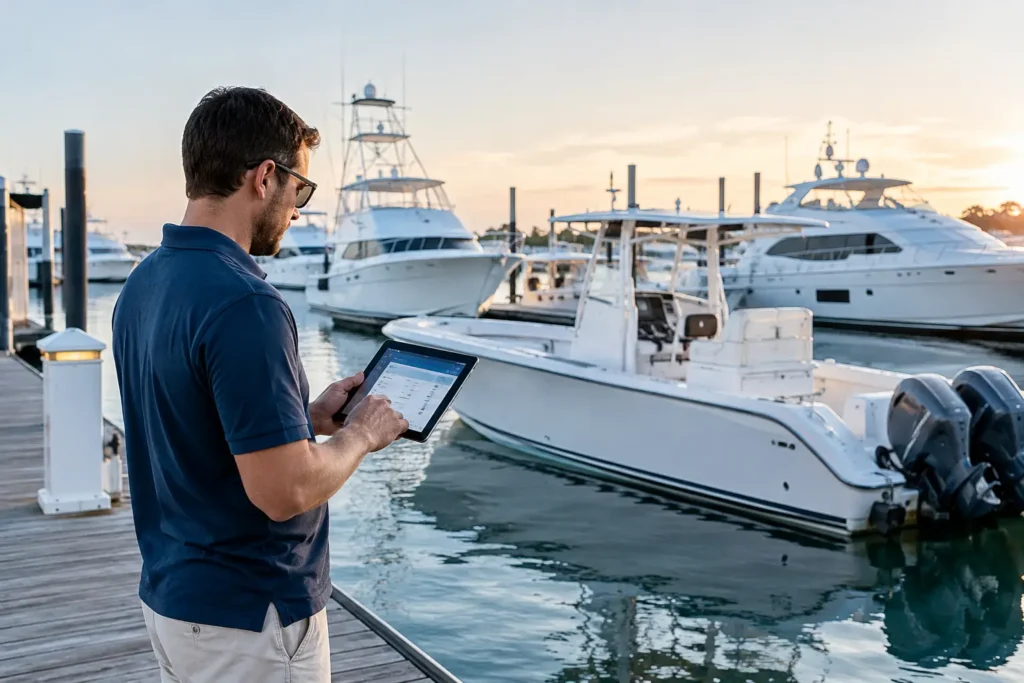
A technician finishes a hot engine-room job at 4:30 p.m. The customer needs the boat for the weekend, the parts are still sitting in a truck, and the handwritten time sheet is headed for somebody’s desk. That is where marine billing transformation either starts or stalls. If the work is not captured while it is fresh, billing becomes a scavenger hunt: hours get rounded, parts get missed, approvals disappear, and the invoice arrives after the customer has forgotten why the repair mattered.
For marine service businesses, boatyards, marinas, and yacht operations, better billing is not just an accounting project. It is an operating discipline. The goal is simple: make the invoice a reliable result of the work performed, not a separate job that starts days later.
Why Marine Billing Breaks Down on the Water
Most billing problems begin before anyone opens accounting software. Marine work happens across docks, travel lifts, service vans, engine rooms, and vessels that may not have dependable connectivity. A job can involve multiple technicians, an owner approval by text, a special-order part, a supplier invoice, and a sea trial that adds unexpected time. Trying to reconstruct all of that from paper tickets and memory is a bad business model.
The usual gaps are familiar. A technician records time at the end of the day instead of at the job. Parts are pulled from inventory but not assigned to the work order. A service writer rekeys notes into an estimate, then rekeys completed work into an invoice. Someone calls for a Hull ID, engine serial number, or prior repair history that should already be attached to the vessel record.
Each gap feels small. Together, they create slow cash flow, disputed invoices, inaccurate job costing, and frustrated customers. They also leave owners with a vague answer to a fair question: “What exactly did you do to my boat?”
What Marine Billing Transformation Actually Means
Marine billing transformation is not putting a prettier invoice template on top of the same disconnected process. It means connecting the field event to the financial record from the moment a job is created.
A clean workflow starts with a vessel-specific work order. The team should be able to see the customer, boat, location, equipment details, reported issue, authorization status, and relevant history without flipping between apps or calling the office. From there, time, labor notes, photos, parts, and completed checklist items are captured against the job as work occurs.
When the work is complete, the invoice is largely assembled already. The service manager still reviews it, applies judgment, handles discounts or warranty decisions, and confirms taxes and rates. But the team is reviewing real dockside records, not trying to decode handwriting from three days ago.
That distinction matters. Automation should reduce administrative drag, not remove professional control. A system that blindly turns every technician note into a billable line item can create as many problems as it solves. The better approach gives the people who know the vessel a fast way to capture facts, then gives the business clear review points before an invoice is sent.
Capture labor where the work happens
Labor is often the largest variable on a marine invoice, and it is the line most likely to be questioned when documentation is thin. Mobile time tracking allows technicians to start, pause, and complete work against the correct job while they are on the boat. Notes can explain the diagnosis, the repair performed, and the reason additional time was needed.
This does not require turning technicians into clerks. A practical mobile workflow can use short notes, voice input, photos, and prebuilt job tasks. If a mechanic says, “Port engine raw-water pump leaking, replaced gasket and tested at operating temperature,” that information should become usable service documentation without a second person typing it all over again.
The payoff is not only faster invoicing. It is a record that supports the invoice if an owner calls two months later, or if the same issue returns before the next season.
Make parts accountable from shelf to invoice
Parts leakage is quiet, expensive, and common. A filter, impeller, hose clamp, or distributor-supplied component may be used correctly on a job but never make it onto the final invoice. On a busy day, nobody notices. Over a year, the margin loss is hard to ignore.
Barcode-based inventory workflows help tie parts to a specific job at the point of use. The technician scans the item, confirms the quantity, and the part is connected to the work order. For special-order parts, supplier documents and costs should be attached to the same job record so the office does not have to guess whether an item was received, used, or billed.
There is a trade-off. A barcode process only works when the inventory catalog is reasonably clean and technicians can find the right item without fighting the app. Start with fast-moving parts and common service kits instead of trying to perfect every shelf on day one.
Let approvals travel with the job
Marine repairs change. A corroded fitting breaks during removal. A compression test points to a larger issue. A yacht captain needs owner approval before moving from diagnosis to repair. Those moments are normal. What causes trouble is when the approval lives in a text thread, a voicemail, or one employee’s memory.
A transformed billing process records the estimate change, the customer or captain approval, and the supporting evidence in the job file. Photos, recommendations, and documented authorization protect both sides. The customer sees why the scope changed, and the business has a traceable record before the work is billed.
A Better Workflow From Service Call to Payment
Picture a common dockside service call. An owner reports an overheating generator. The office creates a job using the boat’s stored information, including location and equipment details. The technician opens the job on a phone, logs arrival time, reviews prior service history, and records diagnostic findings with photos.
The technician uses a checklist to inspect the cooling system, scans an impeller and gasket kit from inventory, and submits a recommendation for additional hose replacement after finding cracking near a clamp. Once approved, the added work is recorded against the same job. At completion, the technician logs the test results and closes the field work.
The service manager reviews the labor, parts, notes, and approval record. Instead of building an invoice from scratch, they are checking a complete operational file. The finalized invoice then moves to the accounting system through a two-way QuickBooks sync, keeping financial records aligned without duplicate data entry.
That is the practical value of connected operations. The owner receives a clear bill with supporting detail. The technician spends less time chasing paperwork. The office can invoice promptly. And the business has usable service history for the next call.
The Data Behind Better Margins and Better Service
Fast invoicing is useful, but the longer-term value comes from the data a connected process produces. When labor and parts are consistently attached to jobs, a service business can see which work is profitable, where estimates run short, and which assets consume the most unplanned time.
A boatyard may learn that certain haul-out packages are underpriced once staging and cleanup time are included. A service company may find that emergency calls are profitable only when travel time is captured correctly. A yacht management team can see recurring issues across systems and schedule preventive work before a guest trip turns into an expensive service call.
This is where vessel-specific records matter. Generic customer histories are not enough when boats have different engine packages, generator models, modifications, and maintenance standards. Good records connect the work to the actual vessel, not just the person paying the invoice.
For recreational boat owners, that same recordkeeping creates a clearer picture of total ownership cost. Bills, maintenance history, documents, and service details stop living in glove boxes, email threads, and photo libraries. Your boat. Your records. Your control.
Where AI Helps, and Where It Should Not Pretend to Be a Captain
AI can speed up the tedious parts of billing when it is grounded in real marine workflows. It can turn spoken technician notes into structured job descriptions, extract data from supplier invoices, suggest a service category from a photo, and flag missing information before a job is closed. It can also help match equipment identifiers and organize service records that would otherwise be buried in PDFs.
But AI should not decide whether an engine repair is safe, approve a scope change without authority, or invent a diagnosis from incomplete symptoms. Boats have a reliable way of making simple jobs interesting. The final call still belongs to the experienced technician, service manager, captain, or owner who understands the vessel and the conditions.
The right standard is not “How much can we automate?” It is “What can we remove from the crew’s plate without losing accountability?” Tools built from the water up should make the dockside team faster and better documented, not bury them in software designed for an office that has never seen a bilge.
Start With One Billing Leak, Then Build
A full process change can feel like a lot when the phones are ringing and the yard is full. Start with the leak that costs the most. For one business, that may be technician time captured late. For another, it is unbilled parts. For a marina, it may be incomplete work authorizations. Measure the current delay from completed job to sent invoice, then improve that one handoff first.
Set clear operating rules: every job gets a vessel record, every billable part is assigned before closeout, and every scope change has documented approval. Train on the dock, not only in a conference room. If a workflow takes too many taps with greasy hands or poor signal, fix the workflow. The crew will tell you where the friction is if you listen.
Yacht Logic is built in the bilge for exactly this kind of work: turning the facts gathered aboard and dockside into organized operational records that support service, billing, and long-term vessel care.
The best billing process is almost invisible to the customer because it feels fair, clear, and timely. For the team behind it, that result comes from doing the small things right while the work is happening – before the boat leaves the dock and the details drift away.