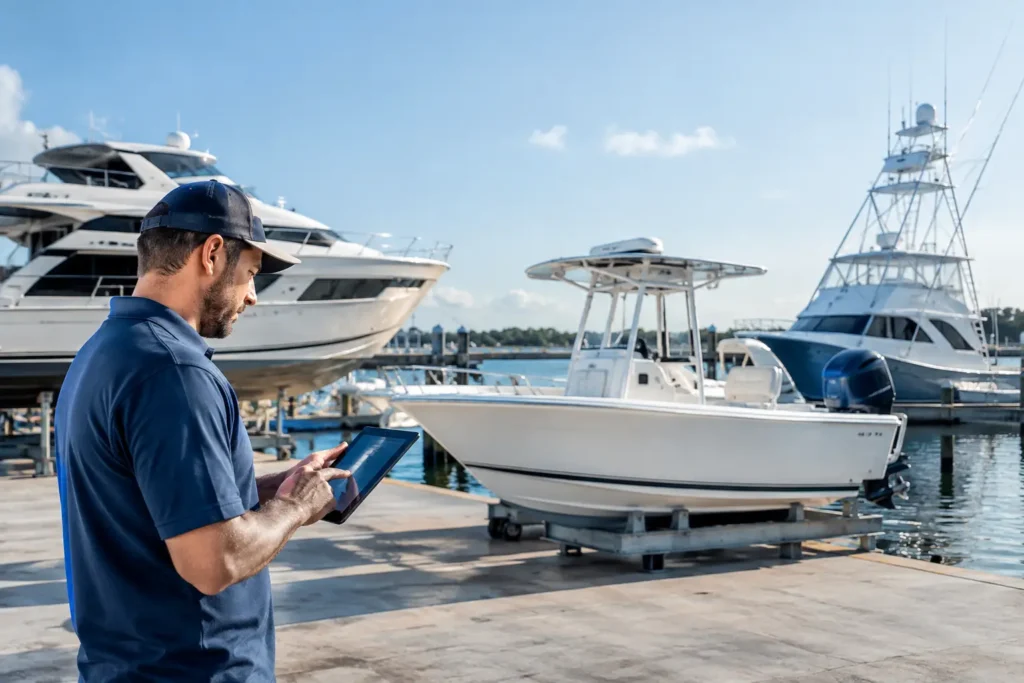
A failed bilge pump, an insurance question, a surveyor asking for service history – none of these are the moment to start opening dusty dock boxes or searching old text threads. Good boat record storage puts the facts about your vessel where they belong: in one organized place, available from the helm, engine room, marina office, or service dock.
Your Boat. Your Records. Your Control. That is more than a clean filing system. It means knowing what was done, when it was done, who did it, what it cost, and what is due next. For a weekend center console or a crewed yacht, the principle is the same. The detail level changes, but the need for traceable records does not.
Why Boat Record Storage Becomes an Operational Issue
Most boats do not lose records all at once. They lose them one receipt, one photo, and one forgotten conversation at a time. A mechanic emails an invoice. A captain saves an engine alarm photo to a personal phone. A previous owner leaves a binder with half the manuals missing. Six months later, no one can say whether the raw-water pump was replaced or merely inspected.
That gap costs more than time. Without a reliable maintenance trail, owners can repeat work, miss warranty deadlines, approve repairs without context, or struggle to support a claim. Service businesses lose billable time chasing equipment details and prior job history. Yacht crews can lose continuity when a crewmember rotates off the vessel.
The real value is not simply storing a PDF. It is creating usable vessel history. A good record should answer the next practical question quickly: What is this component? What happened last time? Which part was used? Is there a warranty? What should happen next?
What to Keep in Your Boat Record Storage
Start with the records that protect the vessel, support service decisions, and are difficult to recreate. You do not need to digitize every old marina flyer. Focus on the documents and details that make operations easier.
A working boat record system normally includes:
- Registration, documentation, insurance, survey reports, Hull ID details, and lien or ownership documents
- Engine, generator, electronics, refrigeration, tender, trailer, and safety-equipment manuals
- Maintenance logs, work orders, invoices, warranty paperwork, and service-provider notes
- Photos of engine plates, serial numbers, wiring labels, fluid specifications, filters, and installed equipment
- Fuel records, upgrade history, seasonal commissioning and layup checklists, and recurring maintenance schedules
For larger yachts, add crew procedures, watchkeeping records, safety drills, guest preferences, certificates, and vendor contacts. These are not just administrative files. They provide continuity between captains, engineers, deck crew, management, and shore-side service teams.
There is a trade-off here. A system can become so detailed that nobody keeps it current. The answer is not less discipline. It is making record capture simple enough to happen during the actual work.
Capture Records Where the Work Happens
The best time to log a repair is when the technician closes the job, not three weeks later from a desk. The best time to photograph an engine plate is when the hatch is open. The best time to save a receipt is when it arrives, before it gets buried under messages and mail.
Mobile-first record capture matters because boating work is mobile. It happens in bilges, lazarettes, marina slips, yards, fuel docks, and on vessels with unreliable connectivity. If your system requires someone to transcribe handwritten notes at the end of a long day, some of those notes will never make it in.
Use photos with purpose. A photo of a corroded fitting before replacement, followed by a photo of the completed repair, gives future technicians useful context. Photograph part numbers, equipment data plates, and label locations. Pair the image with a short note that says what was done and why.
Voice entry can also help when hands are occupied. A spoken note such as, “Port generator oil and filters changed at 1,240 hours, used two filters, inspect the coolant hose next service,” is far more useful once it becomes a dated maintenance record than when it remains a forgotten voicemail.
Organize by Vessel, System, and Date
A folder named “Boat Stuff” is not boat record storage. It is a delay waiting to happen.
Build a structure that reflects how people troubleshoot and maintain a vessel. Begin with the vessel itself, then divide records by system: propulsion, generator, electrical, plumbing, HVAC, navigation, safety, exterior, interior, tender, and trailer where applicable. Within each system, keep documents, service history, photos, and upcoming tasks connected to the relevant equipment.
Consistency matters more than picking the perfect naming convention. For example, a service record named “2026-05-14 Starboard Engine 1,000-Hour Service” is immediately useful. “Invoice final 2.pdf” is not.
Include meter readings whenever they apply. Engine hours, generator hours, fuel levels, battery dates, and odometer readings create the operating context that calendar dates alone cannot provide. An oil change performed 10 months ago may be current for one boat and overdue for another that has run hard all season.
Turn Paper History Into Maintenance Decisions
Stored records only earn their keep when they drive action. Each completed job should update the next required task. Each warranty document should have a visible expiration date. Each recurring item should be tied to a calendar date, an hour interval, or both.
This is where many owners get caught. They have invoices, but no maintenance plan. They know they spent money, but cannot see what is due next or what the vessel is costing by system.
Track costs against the work performed. Over time, that history helps you see whether a recurring issue is becoming expensive, whether a particular component is nearing replacement territory, and whether a quote makes sense. It also gives a new technician a better starting point than, “It has been acting up for a while.”
For marine service businesses, connected records reduce phone calls and repeat inspections. A technician arriving at a boat should be able to see the prior complaint, equipment details, parts used, labor history, and notes from the last visit. That improves handoffs and makes invoices easier to defend.
Yacht Logic Connect is built from the water up for this kind of practical ownership record: a place to centralize documents, track maintenance costs, capture vessel information, and keep the next task from disappearing into a paper pile.
Keep Access Clear Without Giving Away Control
A boat often has more than one person involved in its care. An owner, spouse, captain, marina manager, mechanic, broker, and insurance agent may all need different information at different times. Record storage should make sharing controlled, not chaotic.
Keep ownership and financial documents private. Share equipment manuals and relevant service history with the people doing the work. When using a service provider, give them enough information to diagnose efficiently without handing over unrelated records.
Backups matter too. A cloud-based system can protect against a lost phone, flooded filing cabinet, or damaged onboard computer, but it should not be your excuse to ignore access controls. Use secure logins, review who has access when crew or vendors change, and keep critical ownership documents available offline when a trip or yard period requires it.
Make Records Part of Every Handoff
The strongest boat record storage habit is simple: no job is complete until the record is complete.
After a service visit, attach the invoice, log the work, record the hours, save any warranty details, and set the next maintenance point. After a new installation, photograph the serial number, store the manual, and note any special operating instructions. Before a captain, crew member, or boat manager leaves, make sure their useful knowledge has been turned into a vessel record rather than walking down the dock with them.
A clean history also pays off at resale. Buyers, brokers, and surveyors do not expect a perfect life story for every hose clamp. They do look for evidence that the boat has been maintained deliberately. Organized records can reduce doubt, support value, and make a transaction move with fewer questions.
The boat will always create paperwork. The choice is whether that paperwork becomes a scattered trail of receipts or a working history that helps you make the next call with confidence.