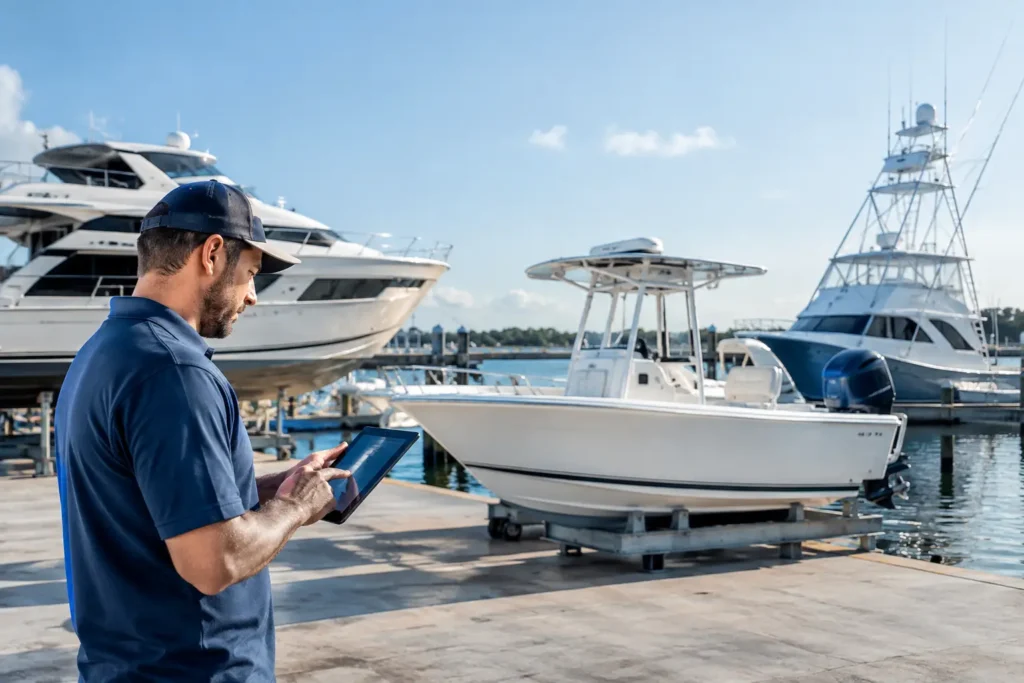
A service call should not begin with hunting for a work order, and a captain should not have to scroll through text messages to find the last generator service. Yet that is how many marine operations still run. To reduce marine paperwork, the real goal is not simply replacing paper with PDFs. It is putting accurate vessel information, job details, photos, parts, and signoffs in the hands of the person doing the work.
Marine paperwork is different from office paperwork. It happens in heat, rain, engine rooms, marinas with weak signal, and at the end of a long day when nobody wants another hour at a desk. A process that looks tidy in an office can fall apart at the dock. The fix has to be built from the water up.
Where Marine Paperwork Actually Costs You
Paper forms create more than clutter. They separate the work from the record of the work. A technician may diagnose an issue on board, scribble notes on a ticket, photograph a corroded connection, and later try to rebuild the story for the invoice. Details get missed. Time entries arrive late. A part gets installed without being deducted from inventory. The customer receives a vague invoice and calls with questions that should have been answered by the service record.
For boat owners, the same problem appears as scattered ownership records. Receipts live in email, manuals are buried in a drawer, maintenance dates are kept in a notes app, and the Hull ID is somewhere in a photo library. When it is time to sell, insure, troubleshoot, or schedule routine service, assembling a usable history becomes a project.
On larger yachts, paperwork has operational consequences. Watchkeeping logs, fuel entries, safety checks, guest preferences, engineering notes, and crew handovers need to be current and traceable. A missed entry may be a minor inconvenience. Or it may leave the next watch without the information needed to make a good decision.
The cost is rarely one dramatic failure. It is the daily drag: duplicate entry, missing context, unbilled labor, avoidable calls, and senior people spending time searching instead of running the vessel or the business.
Reduce Marine Paperwork by Fixing the Workflow
The fastest way to create a new administrative mess is to digitize every old form without asking whether the form is useful. Start with the moments where information is created: when an owner reports a problem, when a technician arrives, when a part is used, when a crew member completes a check, or when a captain hands over a watch.
Each moment should have one simple way to capture the record. A spoken request can become a job. A photo of an engine plate can identify equipment details. A barcode scan can issue a part to a work order. A completed checklist can create a time-stamped record without anyone retyping it later.
That approach matters because marine work is mobile. Requiring people to remember details until they return to a computer guarantees gaps. The best record is captured where the work happens, while the equipment, symptoms, and conditions are in front of the person responsible.
Give Every Vessel a Single Source of Truth
A vessel file should be more than a folder of uploaded documents. It should be a living operating record that holds the details people repeatedly need: vessel specifications, Hull ID, engine and generator information, service history, documents, warranties, maintenance costs, and open work.
For a service business, this means a technician can arrive with the correct vessel context instead of relying on a customer’s memory. For an owner, it means knowing what was done, what it cost, and what is due next. For a captain, it means crew records can follow the vessel instead of walking off with a departing crew member.
There is a trade-off. A single source of truth only works if the team trusts it and keeps it current. Do not try to load every historic receipt and manual on day one. Start with active vessels, critical equipment, recurring maintenance, and current work. Build the habit first, then fill in the archive as it becomes useful.
Turn Service Notes Into Usable Job Records
A good marine job record connects the complaint, diagnosis, work performed, labor, parts, photos, and customer approval. When those details sit in separate places, the office has to interpret what happened. When they are captured in one mobile workflow, the record can move from dispatch to technician to invoice with far less cleanup.
This is especially valuable for vague customer reports. “The port engine alarmed again” is not enough to diagnose or invoice. The job record should preserve the alarm condition, engine hours, readings, corrective action, images, and recommended follow-up. That protects the technician, gives the customer confidence, and gives the next person a useful history.
AI can help here, but only when it is tied to real work. Converting a voice note into a draft job description or extracting details from a document saves time. It should not replace a technician’s judgment or turn an uncertain diagnosis into a confident claim. The useful role of AI is removing repetitive entry so experienced people can focus on the vessel.
Capture Time and Parts at the Point of Use
Unrecorded labor and parts are among the quietest profit leaks in marine service. A technician may spend 20 minutes locating a fault, make two trips to the truck, and use fittings or supplies that never make it onto the invoice. None of that is unusual. It is what happens when recording the work takes longer than doing it.
Mobile time tracking should make starting, stopping, and assigning time to a job straightforward. Inventory should be just as practical. Scan a barcode, select the part, and connect it to the vessel and work order. The goal is not to make technicians act like warehouse clerks. It is to make the correct action faster than writing a note to deal with later.
For businesses using accounting software, the handoff matters just as much. Two-way QuickBooks synchronization can reduce duplicate data entry, but it needs clear ownership rules. Decide which system controls customer records, item details, pricing, and invoice status. Integration without process discipline can simply spread bad data faster.
A Practical Rollout for Boats, Crews, and Shops
Trying to change every workflow at once creates resistance, especially during a busy season. Pick one high-friction process that people already complain about. For a service company, that might be technician time and job notes. For an owner, it may be storing maintenance records and renewal documents. For a yacht crew, it could be watchkeeping and handover logs.
Run the new workflow on real jobs for a few weeks. Watch where people stop, skip fields, or return to a text message. Those are not always training problems. They often show that the workflow asks for information at the wrong time or uses language that does not match how the team works.
Then expand in a sensible order: vessel records first, active work second, labor and parts third, and reporting or accounting connections after the daily habit is stable. Give each field a reason to exist. If nobody uses a data point to schedule, diagnose, bill, comply, or make a decision, it probably does not belong in the workflow.
What Better Records Look Like at the Dock
A clean digital record is not valuable because it is digital. It is valuable because a person can answer the next question without guessing. Has this pump failed before? Which technician last worked on the air conditioning? Is the part in stock? What did the owner approve? When was the last oil sample taken? Who completed the safety check before departure?
That is the standard. Not fewer keystrokes for their own sake, but fewer loose ends.
Yacht Logic is built around that dockside reality. Its connected tools help owners centralize boat records while service teams and yacht crews turn everyday work into organized, traceable operations without dragging everyone back to a desk.
Paper will never disappear completely from marine operations. Some documents still require originals, signatures, or regulated retention. The opportunity is to stop treating every form, receipt, and handwritten note as a separate task. Capture the work once, where it happens, and let the record carry its weight long after the boat leaves the dock.