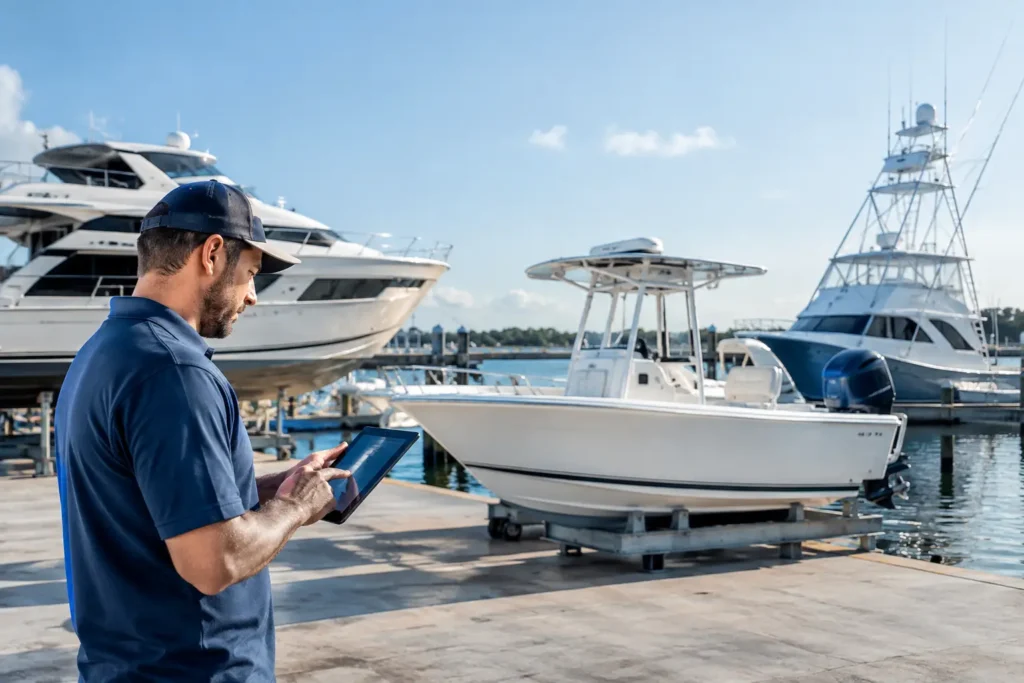
A boat can look immaculate at the dock and still carry years of scattered paperwork behind the helm: an engine invoice in an email thread, a survey PDF in a downloads folder, a handwritten oil-change date tucked into a manual. Digital boat ownership changes that. It gives the owner a working record of the vessel, not just a collection of files that becomes useful only after something breaks.
For a center-console owner running weekends in Florida, that may mean knowing when the water-pump service is due before the summer heat arrives. For a captain responsible for a larger yacht, it means the next watchstander can find critical equipment history without calling three people. The goal is simple: your boat, your records, your control.
Digital Boat Ownership Is More Than an App
Putting a few documents on a phone is not digital boat ownership. A true digital record connects the information needed to operate, maintain, and protect a vessel over time. It brings together the details that are usually split among binders, text messages, service invoices, dealer portals, and the memory of whoever was last aboard.
That starts with the vessel identity: Hull ID, registration, insurance, equipment manuals, engine plates, serial numbers, and warranty information. Then come the living records: service dates, maintenance costs, parts installed, technician notes, photos, fuel entries, and open issues. Add current weather and tide information, plus a dependable way to contact service providers, and the boat begins to have an operational home base.
The difference matters when a problem is time-sensitive. If an engine alarm appears on a Saturday morning, a complete digital history can show what was serviced recently, which filters or impellers were used, and whether the same symptom occurred before. That does not replace qualified diagnosis, but it gives the owner and technician a far better starting point.
Why Paper Records Break Down at the Dock
Paper does have one advantage: it does not need a cell signal. A labeled binder remains worth keeping aboard for essential documents and emergency reference. The trouble begins when paper becomes the only system.
Maintenance records tend to arrive from different places. A mobile mechanic may send an invoice by text. A boatyard may provide a work order by email. A captain may keep a personal spreadsheet. A family member may pay for a repair and file the receipt somewhere unrelated to the boat. Six months later, no one has the complete picture.
This creates more than administrative clutter. It leads to missed maintenance, repeated troubleshooting, and uncertainty around real ownership costs. When it is time to sell, incomplete records can also make a well-maintained boat look less cared for than it truly is.
A digital system does not make every service event cheaper. It does make spending visible. Owners can see whether annual costs are rising because of planned maintenance, unexpected repairs, dockage, fuel, or a pattern of recurring equipment failures. That is useful information before the next invoice lands.
Build the Record Around Real Boat Work
The best system is not the one with the most fields. It is the one people will actually use while standing on a dock, in a bilge, or at the fuel pump. Built from the water up means the workflow has to match how boat work happens.
Start with the equipment that drives downtime
Begin with engines, generators, batteries, pumps, air conditioning, electronics, and safety equipment. Record the make, model, serial number, installation date where available, and the service intervals that matter. Attach manuals, invoices, and clear photos of engine plates or labels.
Do not try to digitize every loose receipt from the past decade on day one. Start with the equipment that can stop a trip or create a safety issue. Then add records as new work is completed. A useful record built consistently beats a perfect system abandoned after one weekend.
Make every service entry answer three questions
A maintenance record should show what happened, when it happened, and who performed the work. Include hours or mileage where relevant, the parts used, the cost, and any recommendation for the next service. A photo of a failed component or a technician’s note can save substantial time later.
If you run a service business, those same details protect both the customer and your operation. Clear job history reduces disputes, gives technicians context before arrival, and creates a professional handoff between the field and the office. The work is already being done. The opportunity is to capture it once, correctly, at the source.
The Cost Question Owners Usually Avoid
Most owners can name the purchase price of their boat. Fewer can say what it costs to operate in a normal year, because the numbers are spread across cards, invoices, and cash payments. Digital records turn those fragments into a clearer financial picture.
Track routine categories such as maintenance, repair, fuel, insurance, dockage, cleaning, upgrades, and towing. The point is not to judge every expense. Boats require care, and a planned haulout is different from a failed raw-water hose. The point is to separate predictable ownership costs from surprises.
That distinction helps with better decisions. If a repair repeats every season, it may be time to address the underlying installation or replace aging equipment. If spending is climbing because the boat sits unused, the owner can reconsider storage, usage plans, or the vessel itself. If the boat is being prepared for sale, organized records can support its value with evidence instead of recollection.
For shared ownership, cost tracking is even more valuable. Everyone can see what has been spent, what remains due, and what maintenance is coming next. It is a practical way to reduce the awkward conversations that can sour an otherwise great arrangement.
Digital Boat Ownership Still Needs Human Judgment
Technology can organize information and reduce repetitive work. It cannot inspect a corroded connection, hear a bearing starting to fail, or decide whether sea conditions are right for your crew and vessel. A weather screen is useful, but it does not replace local knowledge, sound seamanship, or a captain’s decision.
Owners should also think about access. If one person manages every record, what happens when that person is unavailable? Keep ownership documents, insurance details, and essential emergency information accessible to the right people. Use sensible account security, but do not build a system that only one person can operate.
There is also a difference between useful reminders and noise. A maintenance schedule should reflect manufacturer guidance, engine hours, operating conditions, and how the boat is actually used. A vessel that runs hard in hot, salty water may need attention sooner than a boat used lightly in freshwater. Set reminders that lead to action, not a screen full of ignored alerts.
From Owner Records to a Connected Marine Operation
The real payoff comes when records can move with the work. An owner reports a symptom with a voice note or photo. A service provider turns it into a job. The technician sees the equipment history, logs time and parts dockside, and closes out the work with a traceable record. The owner has a clear invoice and an updated service history without re-entering the same information in three places.
That is where an integrated ecosystem earns its keep. Yacht Logic Connect gives boat owners a free place to organize records, costs, documents, weather, tides, and service needs. For marine businesses and yacht crews, the connected professional tools support the heavier operational work: jobs, technician time, inventory, checklists, crew coordination, fuel logs, and accounting workflows.
Not every boat needs every feature. A 22-foot bay boat does not require the same operating structure as a 145-foot yacht with rotating crew and guest preferences. But both benefit from one principle: the vessel record should be current, findable, and useful when decisions need to be made.
Start Before the Next Repair
The right time to organize a boat’s history is not after a breakdown, a claim, or a survey request. Start with one hour and the records closest at hand. Add the Hull ID, upload the current insurance and registration, photograph key equipment plates, and enter the last major service. The next time work is done, record it before leaving the dock.
A boat is rarely simple, but ownership should not require detective work. Give every hour, invoice, maintenance note, and hard-earned lesson a place to live. When the next trip is on the calendar, you will spend less time searching for answers and more time making a smart call about whether the boat is ready to go.