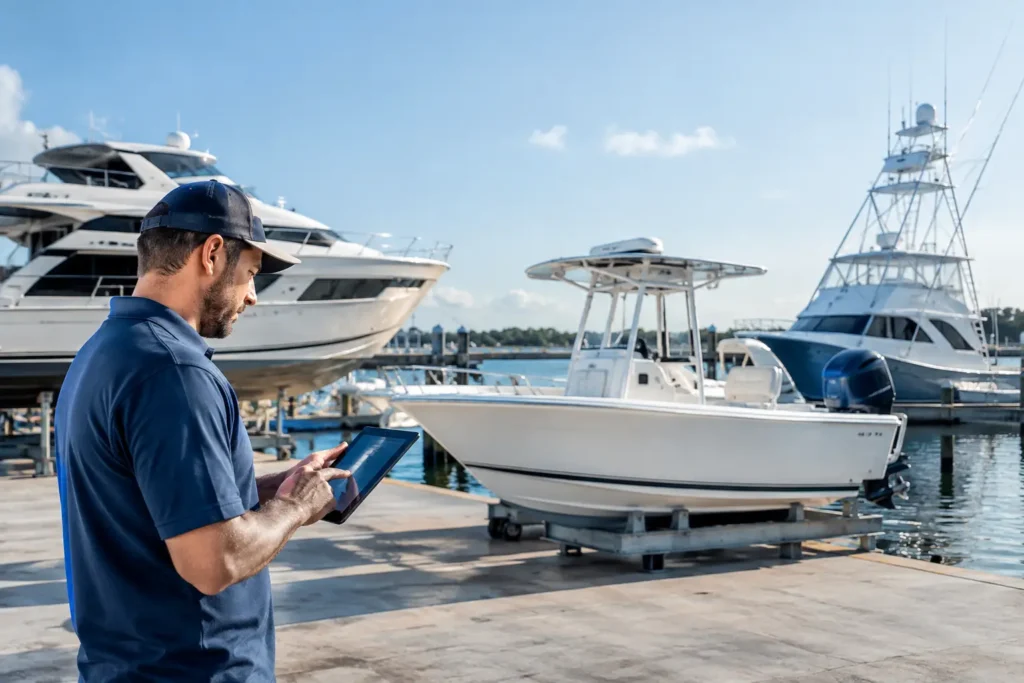
The engine alarm goes off on a Saturday morning, 20 minutes from the inlet. You remember a mechanic replaced a sensor last season, but the invoice is buried in an email, the part number may be in a text thread, and nobody aboard is sure when the impeller was last changed. A free boat management app gives that information a home before a minor question becomes a lost boating day.
For many owners, boat management still means a folder of receipts, notes in a phone, photos of engine labels, and a maintenance spreadsheet that was current for about three weeks. That system can work on a simple skiff with limited equipment. It gets unreliable quickly when you add generators, multiple outboards, electronics, pumps, trailers, safety gear, and service history.
The point is not to add more screen time to boating. It is to spend less time hunting for information and more time making sound decisions at the dock, in the yard, or underway.
What a Free Boat Management App Should Actually Do
A useful boat app should start with the operational basics: a clear vessel profile, maintenance history, ownership documents, expense records, and local conditions. If it cannot help answer, “What was done, when was it done, who did it, and what did it cost?” it is not solving the real problem.
The best tools keep the data tied to the boat rather than scattered across individual devices. That matters when a spouse, captain, co-owner, family member, or trusted mechanic needs the same information. A Hull ID, engine serial number, warranty document, service invoice, and maintenance note should be available without digging through an old inbox while a technician waits.
A free boat management app also needs to be practical on a phone. Boat work happens in engine rooms, on swim platforms, in parking lots, and at marina slips. A system designed only for a desk creates another task to finish later, which is how records stop getting entered.
Maintenance records that stay useful
A maintenance log is only valuable if it gives you context. Recording “oil change” is better than nothing, but the useful record also identifies the engine, date, engine hours, parts used, labor cost, and the person or company who completed the work.
That history makes recurring issues easier to spot. Maybe a bilge pump has been replaced twice in two years. Maybe an outboard is due for annual service before a planned Bahamas run. Maybe the same fault code appears after long idle periods. Clear records help owners have better conversations with service providers and avoid paying for the same diagnosis twice.
The trade-off is simple: the more detail you capture, the more time each entry can take. Look for an app that makes basic logging fast while leaving room to attach an invoice, photo, or note when the job is significant.
Expenses you can act on
Most boat owners know boating has costs. Fewer can quickly separate fuel, dockage, maintenance, upgrades, insurance, and unexpected repairs over a season. Without that view, it is easy to underestimate what the boat is actually demanding.
Expense tracking is not about taking the fun out of ownership. It helps you plan. You can see whether this is the year to replace aging batteries, schedule bottom work early, or hold off on a cosmetic upgrade after a major mechanical repair. It is also helpful when preparing for a sale, reviewing insurance records, or managing a shared ownership arrangement.
Use categories that reflect how you operate. A center-console used for weekend fishing has different cost patterns than a cruising sailboat, a charter vessel, or a large yacht tender. The right system should support the way your boat is used, not force every owner into the same generic budget.
Documents and Photos Are Part of the Boat File
Registration, insurance, manuals, warranties, survey reports, engine plates, and service invoices are not paperwork to deal with once a year. They are operating information.
When a pump fails, a photo of its label can save a trip back to the boat. When a technician needs a serial number, having it in the vessel record can prevent a delay in ordering the correct part. When storm season approaches, fast access to insurance documents and past yard records makes preparation less chaotic.
Document capture is especially valuable for used boats. New owners often inherit a stack of incomplete records, unknown service intervals, and equipment with no clear history. Start by photographing labels and uploading the most important documents first. You do not need to build a perfect archive in one weekend. Build a dependable boat file one service visit at a time.
Weather and Tides Belong in the Same Routine
Weather and tide information do not replace charting, local knowledge, or good judgment. They do belong in the routine before leaving the dock.
A weather view is useful when deciding whether an afternoon run is worth it. Tides matter when your slip is shallow, your ramp is exposed, or your normal route includes a skinny channel. Keeping these tools close to your vessel records encourages a more consistent pre-departure habit.
Conditions are only one part of the decision. Crew experience, fuel range, sea state, mechanical condition, daylight, and a realistic turnaround plan all matter. But the easier it is to check the essentials, the fewer reasons there are to skip the check.
Finding the Right Help Without Starting From Zero
At some point, every owner needs a mechanic, rigger, detailer, surveyor, canvas shop, electrician, or yard. The hard part is often not knowing that help is needed. It is finding a capable provider, explaining the issue clearly, and keeping a record of the work afterward.
A connected app can make that handoff cleaner. Instead of describing a problem from memory, an owner can share the vessel details, symptoms, photos, and prior service history. The service provider starts with better information, and the owner has a clearer record when the job is complete.
That does not mean every issue requires an app or a new vendor. A trusted local mechanic who knows your boat remains valuable. The goal is to preserve the history that makes that relationship work, especially when the boat changes hands or the usual technician is unavailable.
Set Up Your Boat File in One Hour
Do not wait for a refit or an emergency to organize your information. Set aside an hour at the boat and capture the items you will most likely need under pressure.
Start with your vessel name, make, model, year, Hull ID, registration, insurance details, and primary contact information. Then photograph engine and generator plates, battery labels, pump labels, and any equipment that regularly needs parts or service. Add the last major invoices and note the current engine hours.
Next, create a short list of upcoming work. Think in real operating terms: annual engine service, bottom paint, battery testing, fire extinguisher inspection, trailer bearings, safety gear, and hurricane preparation. You can add detail later. The immediate win is knowing what is due and where the records live.
If multiple people use the boat, agree on one rule: any significant service, expense, or equipment change gets recorded before the day is over. The rule is more important than the format. Consistency turns a collection of notes into an operating history.
Free Should Not Mean Disposable
A free app can be a smart starting point, but read the fine print. Consider whether your records remain accessible long term, whether the app is built for boats rather than generic household tasks, and whether the company has a real understanding of marine operations.
Yacht Logic Connect is built from the water up for owners who want permanent no-cost access to organize records, track maintenance costs, check weather and tides, manage documents, and connect with marine service professionals. It is designed around the information boaters actually need dockside, not a generic checklist with a boat icon added later.
As your operation grows, your needs may change. A service company may need technician time tracking, job workflows, inventory control, and QuickBooks synchronization. A large-yacht crew may need watchkeeping, fuel logs, guest preferences, and accountability across departments. Those are different operating environments, and they deserve tools that fit the work.
Your boat does not need a complicated administrative system. It needs a reliable memory. Start with the next invoice, the next engine-hour reading, or the next photo of a part label. When the question comes at the dock, you will have an answer instead of another place to search.