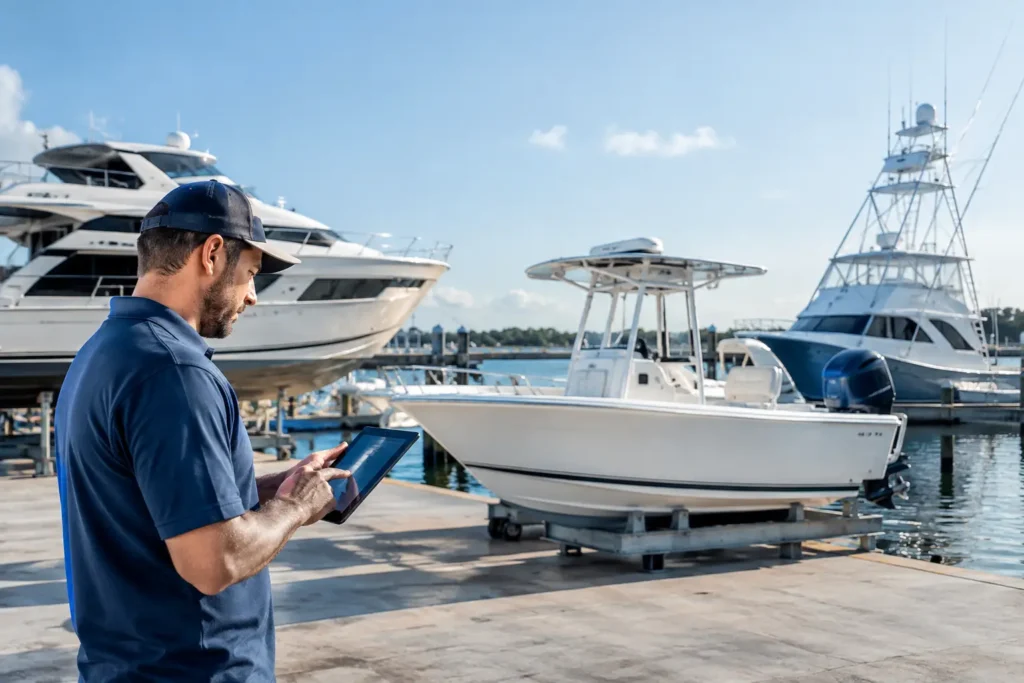
A failed bilge pump, a dead starting battery, and an expired fire extinguisher rarely announce themselves when the boat is sitting clean at the dock. They show up when you are loading guests, leaving an inlet, or trying to make it home before weather turns. A boat maintenance checklist app gives boat owners and crews one place to track what needs attention, what was completed, and what it cost.
The point is not to replace good seamanship or a hands-on pre-departure inspection. It is to stop maintenance from living in a mix of memory, text messages, paper receipts, and a note on the back of a fuel invoice. Built from the water up, the right app turns vessel upkeep into a clear operating routine.
Why a paper checklist stops working
A laminated checklist still has a place onboard. It is fast, visible, and useful when someone is running through a departure check at the helm. But it cannot tell you when the impeller was last changed, which oil filter fits the port engine, or whether the yard completed the work listed on last month’s invoice.
Paper also breaks down when more than one person touches the boat. The owner may know the generator was serviced. The captain may know a diver found zinc loss. The mechanic may have photos of a worn belt and a recommendation for the next haul-out. Without a shared record, those details stay scattered.
A useful app creates continuity. It preserves the vessel’s operating history even when a technician, family member, captain, or service provider changes. That matters on a 24-foot center console and on a 145-foot yacht. The scale changes, but the need for accurate records does not.
What a boat maintenance checklist app needs to track
The best systems are not simply digital to-do lists. They connect the task to the equipment, the date, the service history, and the person responsible. At minimum, an app should make it easy to record recurring work, one-time repairs, inspection findings, documents, and maintenance spending.
Recurring tasks based on real intervals
Marine maintenance follows more than one clock. Some jobs are based on engine hours, such as oil changes, fuel-filter replacement, and generator service. Others depend on time, including annual fire-suppression inspections, registration renewals, and battery testing. A few are seasonal, such as hurricane-prep checks, winterization, and recommissioning.
Your app should support those different intervals without making you rebuild the task every time. When an engine-hour reading is updated, the next service should remain visible. When a task is completed, the system should create the next due date or hour target. If the boat is used lightly, calendar reminders can keep time-sensitive work from slipping. If it runs hard, hour-based reminders are usually the better control.
Equipment-specific records
“Service engines” is not a record. A proper maintenance entry should identify the engine or component, the work performed, the date, engine hours where applicable, and the parts or fluids used. Photos, technician notes, and invoices add valuable context.
This is especially helpful for equipment that has its own service schedule: outboards, sterndrives, diesel mains, generators, watermakers, stabilizers, air-conditioning systems, davits, and onboard refrigeration. If a component has a model number, serial number, engine plate, or warranty document, it belongs in the vessel record.
Pre-departure, return, and safety checks
Not every checklist item is a maintenance job. Some are operational habits that prevent a small issue from becoming a bad day.
A pre-departure checklist may cover fuel level, navigation lights, bilge condition, battery switches, weather, tide, safety gear, VHF function, and drain plugs. A return-to-dock checklist can include freshwater rinse-down, shore power, seacocks, engine-room visual checks, trash removal, and charging status.
For larger boats, the same concept extends to watchkeeping, tender readiness, guest areas, provisioning, and crew handovers. The app should let you build checklists that match the vessel and the operation, not force every boat into the same generic template.
Spending and service history
Maintenance decisions get easier when the cost history is clear. An app should show whether annual service expenses are stable, rising, or being driven by repeated repairs on the same system.
That does not mean every repair requires an immediate replacement decision. A recurring issue may be normal for an older vessel, or it may signal that a component is reaching the point where reactive repairs cost more than planned replacement. Records give you a better conversation with your mechanic, broker, insurer, or future buyer.
Build checklists around systems, not vague reminders
A maintenance plan becomes more usable when it follows the way a boat is actually built and operated. Instead of one long list labeled “Boat Tasks,” organize work by system: propulsion, electrical, plumbing, safety, hull and deck, electronics, HVAC, and onboard equipment.
For example, a propulsion checklist can hold engine oil, gear lube, belts, hoses, filters, cooling-water pumps, props, trim tabs, and engine alarms. A safety checklist can include life jackets, flares, fire extinguishers, EPIRBs, first-aid supplies, carbon-monoxide detectors, and emergency steering gear.
This structure helps when a symptom appears. If the boat has a charging issue, you can review battery records, shore-power checks, charger service, alternator work, and recent electrical notes without sorting through every task on the vessel.
Avoid overbuilding the list on day one. Start with manufacturer-required service, safety items, and the handful of systems that cause the most trouble on your boat. Add detail as you learn the vessel. A checklist that is used beats a perfect checklist nobody opens.
How to set up your maintenance routine
Begin by gathering the material already aboard or sitting in a drawer at home. Collect manuals, old invoices, registration records, warranty information, service recommendations, and equipment serial numbers. Photograph engine plates, generator labels, pumps, battery banks, and other components that are hard to identify later.
Then enter the boat’s core profile: make, model, year, Hull ID, engine details, and current engine hours. If you have more than one engine or generator, give each one a clear name. “Port Main” is more useful than “Engine 1” when someone is standing in the engine room with a phone in hand.
Next, create your baseline. Log the last known completion date for critical services, even if the exact information is imperfect. Mark uncertain records clearly rather than guessing. If you do not know when the raw-water impeller was changed, schedule an inspection and establish a reliable date going forward.
Finally, set reminders based on how you use the vessel. A weekend boat that stays on a lift has different priorities from a charter boat, a liveaboard, or a yacht operating year-round in South Florida. Saltwater exposure, run hours, climate, storage method, and vessel age all affect the schedule.
Features that save time at the dock
The difference between a helpful app and another digital filing cabinet is how quickly it captures information. Dockside work is dirty, time-sensitive, and frequently interrupted. Nobody wants to type a long note while holding a flashlight in an engine compartment.
Look for mobile-first tools that let you add photos, attach invoices, record costs, and create tasks while you are standing next to the equipment. Voice input can be useful when your hands are full. Document extraction can save time when a service invoice needs to become a dated record instead of another PDF buried in email.
For owners who use outside service providers, shared visibility matters. You should be able to see the requested work, track progress, review completed notes, and retain the invoice against the relevant system. For marine businesses, that same record can tie into technician time, parts, inventory, and accounting workflows rather than requiring duplicate entry.
Yacht Logic Connect is designed for this practical side of ownership, bringing maintenance records, costs, documents, weather, tides, and service connections into one mobile boat-management workspace. For professional operations, connected workflows can carry that information farther into job creation, barcode inventory, technician tracking, and two-way QuickBooks synchronization.
Do not confuse reminders with maintenance control
A reminder that says “change oil” is better than nothing. But maintenance control requires proof of completion and a trail someone else can understand. Was the oil changed? Which oil was used? At what hours? Was an oil sample taken? Did the technician identify a leak that needs follow-up?
Those details are what protect the value of the vessel and reduce repeat troubleshooting. They also make a boat easier to sell. A buyer may not pay extra for every organized record, but missing records create doubt fast, especially around engines, generators, major repairs, and safety equipment.
The best routine is simple: inspect regularly, document work when it happens, and review upcoming tasks before they become urgent. When your records are current, maintenance stops being a last-minute scramble and becomes part of how you run the boat with confidence.