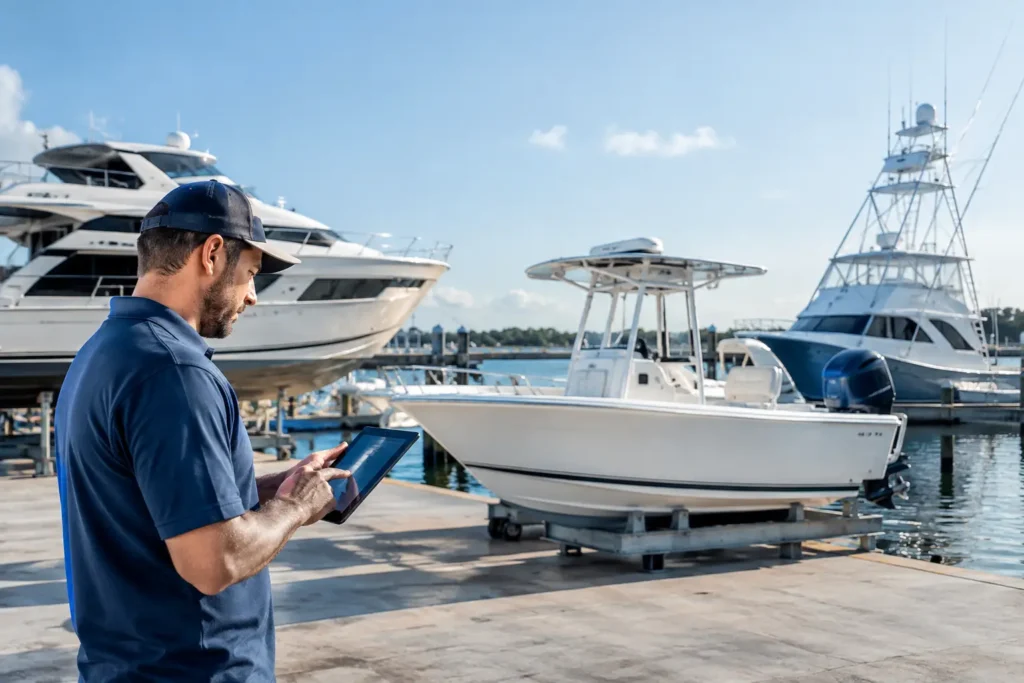
A warranty expires while the receipt is buried in a binder. A technician needs an engine serial number, but the photo is on someone else’s phone. A captain is asked for last year’s service history minutes before a survey. These are the moments that make boat paperwork expensive. To digitize vessel paperwork is not simply to scan documents. It is to make the right vessel information usable when the boat is at the dock, in the yard, underway, or changing hands.
Paper still has a place on board. Original registrations, certificates, and certain signed documents may need to remain physically available. But paper cannot be your only system of record if you want faster service decisions, cleaner maintenance history, and less time chasing details across text messages, filing cabinets, and crew notebooks.
Why Vessel Paperwork Breaks Down
Vessels create records constantly. Purchase invoices, engine manuals, haul-out reports, insurance documents, fuel logs, maintenance checklists, equipment warranties, survey findings, and vendor estimates all arrive in different formats. They often stay where they landed: an email inbox, a glove compartment, a clipboard, a phone camera roll, or a former crew member’s laptop.
That fragmentation creates more than clutter. It removes context. A service invoice without the related work order may not explain what failed. A parts receipt without the vessel, engine, or job reference may not help six months later. A photo of an engine plate is useful only if someone can find it when ordering a filter or diagnosing a fault.
For owner-operators, the cost is usually wasted time and repeat work. For marine service businesses, it can mean slow billing, missed parts, disputed labor, and weak job history. For yacht crews, inconsistent paperwork can affect watchkeeping, planned maintenance, handovers, and the confidence of an owner or manager.
The goal is not to create a prettier digital filing cabinet. The goal is operational control.
How to Digitize Vessel Paperwork the Right Way
Start with the documents that affect safety, compliance, maintenance, money, or resale value. Do not begin by scanning every old magazine, receipt, and miscellaneous note in a locker. A focused first pass builds momentum and gives your digital system immediate value.
For most vessels, the priority records are:
- Registration, documentation, insurance, surveys, and inspection records
- Engine, generator, tender, and major-equipment manuals, serial numbers, and warranty details
- Service invoices, work orders, maintenance logs, and parts receipts
- Purchase records, upgrades, refit documents, and recurring operating expenses
Once those records are in one place, add the secondary material as it becomes useful. The right sequence depends on the boat. A 24-foot center console may need simple maintenance and insurance records. A charter vessel may prioritize compliance files, engine history, and fuel documentation. A large yacht needs deeper asset-level records, crew handover notes, vendor history, and structured checklists.
Capture Documents at the Point of Work
The best time to capture a record is when the work is happening, not two weeks later at a desk. If a technician replaces an impeller, photograph the invoice, record the engine hours, note the part number, and attach it to the job before leaving the boat. If a captain receives a delivery of safety equipment, record the item, expiry date, location, and supporting document while it is in hand.
Mobile capture matters because boats do not operate from office desks. Sun glare, poor connectivity, wet hands, and tight engine rooms are normal working conditions. A process that requires crew or technicians to re-enter everything later will eventually fail under pressure.
This is where artificial intelligence can be practical rather than decorative. Document extraction can pull a vendor name, invoice number, date, total, part description, or equipment detail from a photo or PDF. It still needs a human check. Marine invoices are rarely perfect, and a wrong engine model or misplaced decimal can create a bad record. But reviewing extracted information is much faster than typing every field from scratch.
Organize Around the Vessel, Not the File Type
A generic folder structure such as “Invoices 2026” is better than a desk drawer, but it is not enough. Records should connect to the vessel and, when relevant, to a specific asset, job, location, vendor, and date.
Think about the question you will need to answer later. What work has been done on the port engine? When was the watermaker last serviced? Which vendor installed the new batteries? What did the last haul-out cost? Which documents support the asking price if the boat is sold?
That means a bilge pump receipt should not live only in “Receipts.” It should be tied to the bilge pump or the related maintenance task. An engine service invoice should be connected to the correct engine, current hours, service provider, and recommended next interval. A digital record with this context becomes searchable history, not just a scanned image.
Build a Simple Naming and Approval Standard
Consistency beats complexity. Decide who can add documents, who checks them, and what minimum information belongs with each record. For a private boat, that may be one owner and a trusted service provider. For a yacht or boatyard, it may include engineers, deck crew, captains, office staff, and outside technicians.
Use a practical naming standard where needed: date, vendor, asset or system, and type of work. For example, “2026-08-14 Marine Diesel Starboard Main 1,000-Hour Service.” The system should also store the original file, because details that seem unimportant now may matter during a claim, survey, warranty request, or sale.
Avoid making every team member responsible for cleaning up everyone else’s records. The person closest to the work should capture the source information. A captain, manager, or service writer can review it for completeness. That division keeps the record accurate without turning documentation into a bottleneck.
Connect Paperwork to Maintenance, Inventory, and Costs
Digitized paperwork becomes valuable when it drives the next action. A service record should be able to create or update a future maintenance task. A parts invoice should inform inventory. A completed job should support labor tracking and customer billing. A fuel receipt should contribute to operating-cost visibility.
This connection is particularly important for service companies. A work order that starts from a customer call, captures technician time dockside, records parts used, and carries the final invoice into accounting reduces the gaps where revenue and information disappear. If inventory is managed by barcode and job records are tied to a specific vessel, the team can see what was used, what needs reordering, and what should be billed.
For owners, cost history changes the maintenance conversation. Instead of guessing what a boat has consumed over a season, you can see spending by system, vendor, or project. That does not eliminate unexpected repairs. Boats still have a way of finding the one component that fails at the least convenient moment. It does provide a defensible history for planning, troubleshooting, and deciding whether to repair, replace, or refit.
Yacht Logic is built from the water up for this kind of work: turning photos, records, and dockside updates into useful vessel operations data instead of another stack of disconnected files.
Protect the Records You Cannot Afford to Lose
Digitizing paperwork is also a risk-management decision. Keep original documents when regulations, lenders, insurers, or flag requirements call for them. Then maintain secure digital copies that can be accessed by the right people without giving everyone unrestricted access.
Permissions matter. A technician may need equipment specifications and job history but not insurance details or owner financial documents. Crew may need current checklists and manuals but not every vendor contract. Build access around roles, and remove access promptly when staff, contractors, or management companies change.
Backups matter too. One phone is not a records system. One laptop in the office is not a records system. The digital record should be stored in a platform designed to preserve history, with account access protected by strong passwords and appropriate authentication. Before choosing a system, ask how information can be exported, who owns it, and what happens if a user leaves the organization.
Start Small, Then Make It Routine
Do not wait for a refit, a survey, or a paperwork crisis to begin. Pick one vessel and one workflow. It might be capturing all current engine records, organizing insurance and registration documents, or requiring every completed service job to include photos, time, parts, and a customer-ready report.
Set a short cleanup period for the backlog, then shift the focus to keeping new records current. The backlog is finite. The real win is preventing the next invoice, manual, or maintenance note from vanishing into the usual pile.
A vessel runs better when its records travel with it. Put the information where the work happens, give it enough context to answer real questions, and let every repair leave the boat easier to operate than it was before.