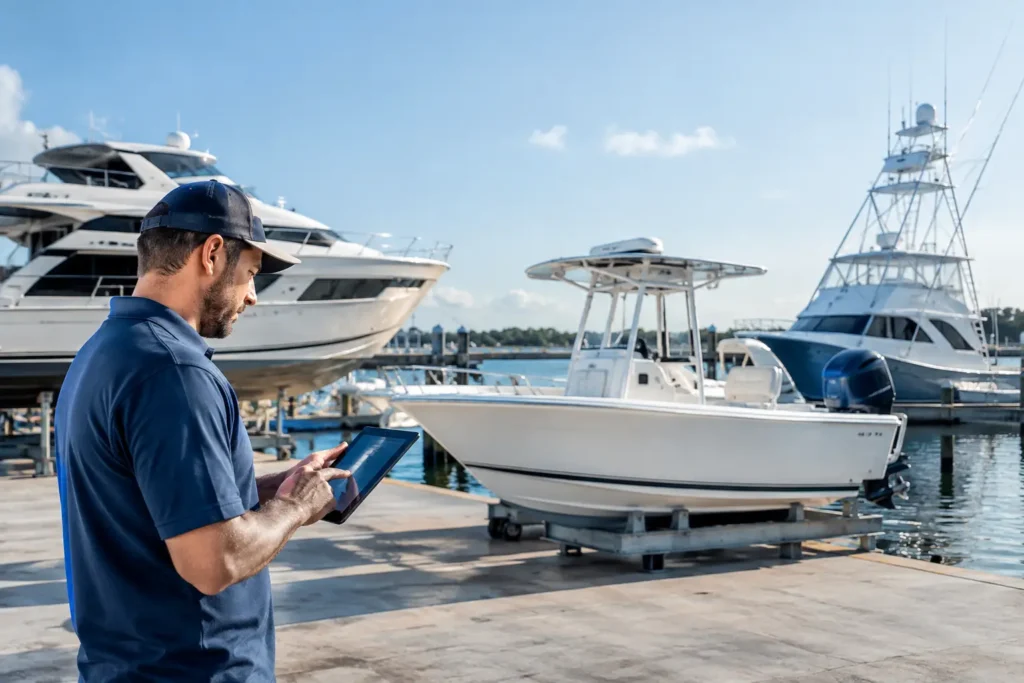
A registration renewal is due. The insurance carrier wants a survey from three years ago. A technician needs the generator model and serial number while standing in the engine room. None of these should require opening a damp file box, texting three people, or driving back to the boat. Knowing how to digitize boat documents puts the records that prove, protect, and maintain your vessel where they belong: in your hand.
The goal is not to scan every scrap of paper into a digital junk drawer. The goal is to build a usable vessel record that works when you are at the dock, underway, buying parts, filing a claim, or handing the boat to a new captain or service provider.
Start With the Documents That Matter Most
Most boats have years of paperwork, and trying to digitize it all in one weekend is how the project gets abandoned. Start with documents that have a legal, financial, operational, or safety purpose.
Your first batch should include the vessel registration or documentation, insurance policy, survey, title or purchase records, loan documents if applicable, and any warranty paperwork. Add your engine, generator, outboard, electronics, and major equipment manuals. Service invoices, maintenance logs, haul-out records, and receipts for significant upgrades belong in the same priority group.
For a larger yacht or a vessel with crew, add certificates, safety equipment inspections, fuel records, watchkeeping documents, crew qualifications, and vendor agreements. The exact folder structure depends on the operation, but the principle stays the same: preserve records that affect compliance, ownership, maintenance decisions, or the vessel’s value.
Do not wait for perfect organization before scanning. A clean digital copy with a basic label is more useful than an unscanned original sitting in a drawer.
How to Digitize Boat Documents the Right Way
A phone is usually enough to begin. For single-page records, use a scanning app or the document-scanning feature built into your phone. Place the paper on a dark, flat surface, work in even light, and make sure the full page is visible. Review the image before moving to the next document. A cropped Hull Identification Number, signature, or serial number can make an otherwise good scan useless.
For thick manuals, bound logbooks, and large sets of invoices, a desktop scanner may be worth the time. Scan those documents as searchable PDFs when possible. Searchable text makes it much easier to find a particular part number, warranty clause, or maintenance note months later.
Photos are often the fastest way to capture information that never came on paper. Photograph engine plates, generator serial numbers, battery labels, shore power components, watermaker controls, electronics model numbers, and installed equipment before a label fades or a component is replaced. Take a wider photo showing where the item is installed, then a close-up of the plate. The wider image gives future owners, crew, and technicians context.
Use File Names That Work Under Pressure
A file named “Scan_2047.pdf” does nothing for you on a busy Friday afternoon. Use a simple format that tells you what the document is without opening it:
`2026-03-15_Port_Engine_Annual_Service_Invoice.pdf`
Start with the date in year-month-day format so files sort correctly. Follow it with the boat name or vessel identifier if you manage more than one boat, then the system or document type and a short description.
Consistency matters more than the exact wording. If you call it “Port Engine” once, do not call it “Main 1” next time unless those labels are already standard aboard. A captain, mechanic, spouse, or future buyer should be able to find what they need without decoding your naming system.
Organize by Vessel System, Not by Whoever Sent It
Email inboxes are poor maintenance systems. So are folders named after mechanics, marinas, or insurance agents. A service provider may work on five different systems over time, while one engine may have records from a dozen vendors. Organize around the boat and its equipment.
A practical folder structure might begin with vessel administration, insurance and surveys, propulsion, generator, electrical, plumbing, electronics, safety, maintenance history, and upgrades. Within each system, keep manuals, invoices, photos, warranties, and inspection reports together.
For example, a new raw-water pump invoice should be easy to find under the engine it serves, along with the pump model, prior service notes, and a photo of the installation. That record tells a more useful story than a receipt sitting alone in a folder labeled with the shop’s name.
If you operate a service business, use the same logic in reverse. Capture customer documents and equipment data against the specific vessel, system, and job. This reduces repeat data entry and gives technicians the history they need before they arrive at the dock.
Make Records Searchable and Connected to Maintenance
Digitization is only half the job. The real value shows up when a document becomes part of an operating record.
When you upload an invoice, record the service date, engine hours, work completed, parts used, and the next recommended service interval. If the invoice covers multiple systems, split the related records rather than burying everything in one file. A yard invoice may include bottom paint, zinc replacement, prop speed work, and a through-hull repair. Those items should be traceable to their respective maintenance histories.
This is where a boat-management platform can save real time. Yacht Logic Connect can centralize vessel records, maintenance costs, manuals, and document details in one mobile-first place, rather than leaving critical information spread across photos, email, paper binders, and disconnected cloud folders.
For professionals, connected records matter even more. A technician should be able to see prior job notes, equipment details, parts history, and open work before diagnosing an issue. The owner should be able to see what was done, what it cost, and what needs attention next. Good documentation prevents the familiar dockside conversation: “I know we replaced that, but I cannot remember when.”
Protect the Digital Copies and the Originals
Digital records need their own maintenance plan. Keep files in a system that is backed up automatically and protected with a strong, unique password. Use multi-factor authentication wherever it is available, especially for ownership, insurance, financial, and crew records.
Keep a second copy of your most critical files. That may mean a secure cloud backup plus an encrypted external drive stored off the boat. If the boat is damaged, stolen, or suffers a major electrical event, a hard drive in the onboard nav station is not much of a backup.
Original paper documents still matter. Store vessel documentation, titles, notarized records, and other originals in a dry, secure location. Depending on the document, that may be ashore rather than aboard. Digital copies make the information accessible, but they do not always replace an original required by a lender, agency, insurer, or buyer.
Build the Habit After Every Job
The best record system is the one that stays current. Set a simple rule: after any service visit, purchase, inspection, or upgrade, capture the paperwork before it disappears into a truck console, galley drawer, or email archive.
For owners, that can mean scanning the invoice while still at the marina. For captains and crew, it may mean adding photos, meter readings, and work notes at the completion of the task. For service businesses, it means closing out the job with accurate labor, parts, findings, and customer approval while the details are still fresh.
Do not overcomplicate the process. A few minutes of recordkeeping after each event is easier than rebuilding years of history before a survey, sale, warranty claim, or breakdown.
Your boat does not need more paperwork. It needs a record system built from the water up, one that lets you answer the next question with facts instead of a search through a wet binder.